May through September
Weed Control & Fertilizing in Saskatoon
Scheduled weed control and fertilizer programs built around the Saskatchewan season.
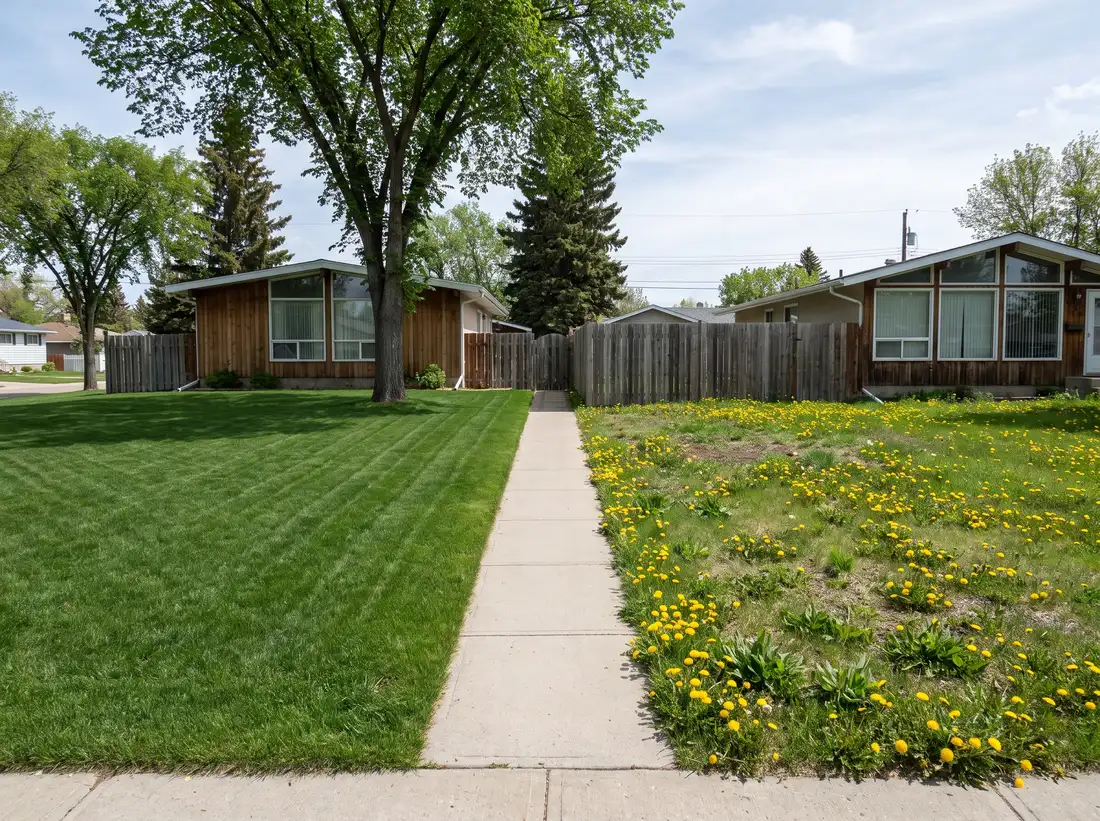
We run scheduled weed control and fertilizing programs for residential lawns in Saskatoon and the surrounding communities, targeting the dandelion, creeping thistle, and clover that dominate prairie lawns. The work is timed to the Saskatchewan season rather than a generic calendar, because a herbicide application made when the plant is not actively moving sugars to its roots simply burns the top off and the weed returns. Homeowners use this to get a thick lawn that crowds weeds out on its own.
What Is Involved in a Weed Control and Fertilizing Program?
A season program for a Saskatoon lawn is a series of timed visits rather than a single treatment. Fertilizer goes down in spring to push recovery out of winter, again in early summer at a lower rate, and — most importantly here — in early fall, which is the application that does the most for a prairie lawn because bluegrass puts its energy into roots rather than leaves as the season closes.
Weed control is applied as a broadleaf treatment to the areas that need it rather than blanket-sprayed across a whole property by default. Dandelion, creeping thistle, plantain, and clover are the four that account for nearly everything we treat in Saskatoon lawns. We treat when the weeds are actively growing and translocating, which is what carries the product to the root rather than just scorching the visible leaf.
We also tell you which problems are not weed problems. A lawn that is thin because it is compacted will refill with weeds within a season no matter how well it is sprayed, because bare ground gets colonized by whatever germinates first. In those cases the treatment is aeration and feeding, not more herbicide.
When Should You Treat Weeds in a Saskatchewan Lawn?
Late spring, once dandelions in Saskatoon have leafed out and are actively growing, is the first useful window — typically late May into June. Treating earlier, while the ground is still cold and the plant is barely moving, wastes the application. The visible yellow flush across the city in the last week of May is the practical signal.
Early fall is the more effective window and the one most homeowners miss. From late August into September, perennial weeds like dandelion and creeping thistle are pulling sugars down into their root systems to overwinter, and a treatment applied then goes down with it. Fall treatment is why some lawns come out of a Saskatoon winter clean and others come out covered in rosettes.
Midsummer is the worst time. In the heat of a dry Saskatoon July, weeds are not growing actively, the lawn itself is stressed, and applying product then risks damaging the grass while barely touching the weed.
Why Does My Saskatoon Lawn Keep Getting Dandelions Back?
The most common reason a Saskatoon lawn keeps refilling with dandelions is that the lawn is thin and the weeds are simply occupying the space. Dandelion seed is airborne and the city has an enormous reservoir of it in boulevards, back lanes, and vacant lots. Bare or thin turf is an open invitation; dense turf is not. Spraying a thin lawn treats the symptom.
Creeping thistle behaves differently and catches people out. It spreads by an underground root system, not just by seed, so pulling it or burning off the top growth leaves the network intact and it comes back a few feet away. Thistle genuinely needs a translocated treatment at the right time of year, and it usually needs more than one season.
The third factor is that a neighbouring untreated yard, lane, or boulevard reseeds yours every year. This is not a reason to skip treatment, but it is the reason a lawn in a Saskatoon neighbourhood needs an ongoing program rather than one heroic application.
What Affects the Cost of Weed Control in Saskatoon?
Treated area is the base of the price, and it is the actual turf area rather than the lot size — a large lot that is half driveway, deck, and beds costs less to treat than the number on the tax assessment suggests.
The starting condition matters a great deal. A lawn that is already reasonably clean needs a maintenance program; a lawn that is more dandelion than grass needs a heavier first season with more visits, and it is honest to say that up front rather than promising a single spray will fix it.
Number of visits is the main lever you control. A two-visit season handles a lawn in decent shape. A four- or five-visit program, with the fall applications included, is what turns a genuinely weedy lawn around, and it costs proportionally more.
Whether fertilizer is included changes the number as well. Weed control alone is cheaper on paper, but on a thin Saskatoon lawn it is also less effective, because nothing fills the space the weeds vacate.
Do I Need Weed Control, Aeration, or a New Lawn?
If the grass between the weeds is thick and healthy, weed control is the right service and it will work. A lawn with good density and a dandelion problem is a straightforward job, and one full season of correctly timed treatment usually settles it.
If the lawn is thin, hard underfoot, and the weeds are filling gaps rather than competing with grass, lawn aeration comes first. Spraying a compacted lawn clears the weeds temporarily and leaves bare clay, which is reseeded from the air within weeks. Aerate, feed, overseed, then treat what remains — in that order.
If more than about half the area is weed rather than grass, or the turf is dead in large patches, treatment is throwing money at a lawn that is finished. At that point sod installation gives you a better lawn for a comparable spend over a couple of seasons, and it starts clean.
Where Does This Fit With the Rest of the Yard?
Weed Control & Fertilizing is rarely the only thing a property needs, and the order the work happens in matters more on Saskatoon clay than most people expect. Ground comes first: if water is pooling or running toward the house, grading and drainage is the job to do before anything you can see. Buried services like irrigation go in before surfaces, and sod goes down after the hard landscaping rather than before it.
The jobs most often quoted alongside this one are lawn care, lawn aeration and sod installation. Doing them in one visit is usually cheaper than bringing equipment back, because the mobilisation and the machine access are paid for once.
If you are planning the whole property rather than one job, start with a landscape design so the phases are sequenced before anything is built. Otherwise, the full service list covers everything we do, the cost guides explain what drives each price here, and the how-to guides are written for Saskatchewan timing rather than the milder-climate advice most search results give you. We work across Saskatoon and the surrounding area, including Warman, and every quote is free and given on site.
Get a free weed control & fertilizing quote
Tell us what you need and where the property is. We come out, look at the ground, and give you a written scope and price — no charge and no obligation.
- Free on-site quotes across Saskatoon
- Prairie-hardy plantings that survive zone 3a winters
- Utility locates arranged before any digging
- Summer yard work and winter snow from one contractor
- Written scope before a shovel goes in the ground
Frequently Asked Questions
When should you fertilize your lawn in Saskatchewan?
The three useful windows in Saskatchewan are late spring once the lawn is actively growing, early summer at a reduced rate, and — the most valuable one — early fall, from late August into September. The fall application is the one that matters most on the prairies, because bluegrass is putting its energy into root development at that point rather than into top growth.
When should you not put fertilizer on your lawn?
Avoid fertilizing in the heat of a dry Saskatoon midsummer, when the lawn is already stressed and pushing new growth it cannot support does more harm than good. Also avoid feeding late in the fall after growth has stopped — the nitrogen is not taken up, and it simply runs off with the spring melt.
How many treatments does it take to get rid of dandelions?
A lawn in reasonable shape usually needs two correctly timed treatments in one season — one in late spring and one in early fall. A badly infested lawn generally takes a full season of three or four visits, and creeping thistle often takes two seasons because it regenerates from an underground root network rather than from seed.
Is weed control safe around children and pets?
Products are applied at label rates by an applicator following the Saskatchewan requirements, and the standard direction is to stay off the treated area until it has dried. We tell you the re-entry interval for what was actually applied on the day rather than a generic answer, and we post the treatment.
Why do the weeds come back every year even after spraying?
Usually because the lawn is thin and the weeds are occupying bare ground rather than outcompeting healthy grass. Dandelion seed blows in constantly from lanes and boulevards across Saskatoon. Dense turf resists it; thin turf cannot. If weeds return quickly and consistently, the underlying problem is lawn density, not the herbicide.
Can you treat weeds without using chemicals?
Partially. Correct mowing height, proper feeding, aeration, and overseeding genuinely reduce weed pressure by making the lawn dense enough to crowd weeds out, and for a lawn in decent shape that can be enough. For an established creeping thistle infestation, cultural practices alone will not clear it, and we will tell you that rather than sell you a program that cannot work.
Do you spray the whole lawn or just the weeds?
It depends on the infestation. Scattered dandelions get spot treatment, which uses far less product. A lawn with weeds distributed throughout needs broadcast treatment, because spot-treating a hundred plants individually is neither practical nor cheaper. We tell you which approach a lawn needs when we quote it.
Will fertilizer burn my lawn?
It can, if it is applied at the wrong rate, in the wrong conditions, or left in piles by a poorly calibrated spreader. Applied at the correct rate and watered in, it will not. The risk is highest on a hot dry day in a Saskatoon July, which is one of the reasons the schedule avoids that window.
How soon can I mow after a weed treatment?
Generally leave two to three days before mowing so the product has time to move into the plant rather than being cut off and removed. Mowing immediately before a treatment is also unhelpful, since it takes away the leaf area that absorbs the application.
Does clover mean my lawn is unhealthy?
Clover usually indicates low soil nitrogen, since clover fixes its own and outcompetes grass where fertility is poor. It is genuinely a symptom rather than the disease. Feeding the lawn properly shifts the balance back toward grass, and many people in Saskatoon now choose to leave clover in place because it stays green through a dry July when bluegrass browns off.
Related services
Most weed control & fertilizing jobs in Saskatoon come with one or two of these attached — it is usually cheaper to do them in the same visit than to bring equipment back.
May through September
Lawn Care
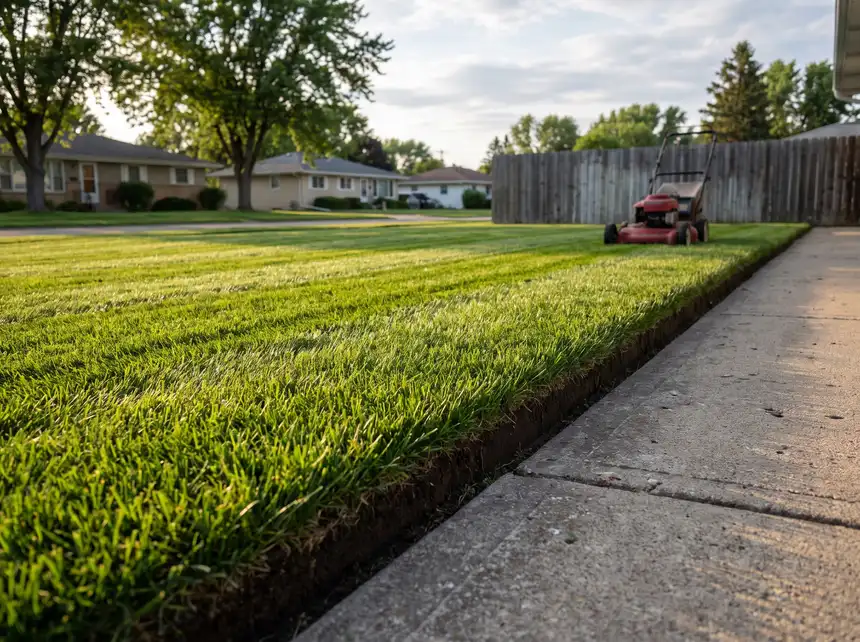
Weekly mowing, trimming, and seasonal lawn maintenance across Saskatoon and area.
See what it involves→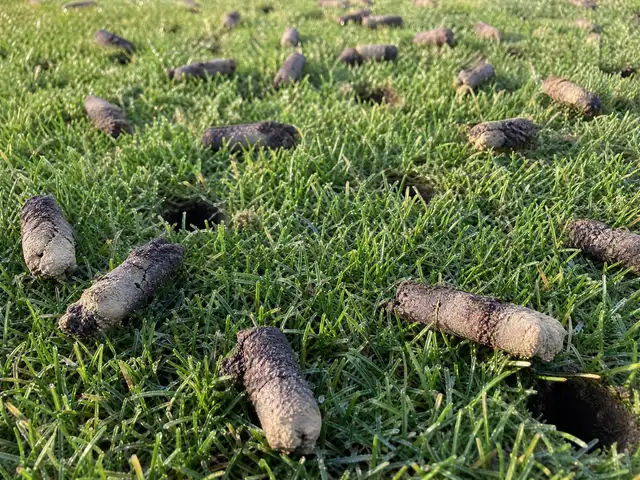
Lawn Aeration
Core aeration that opens up Saskatoon clay so water, air, and roots can get down.
May and September
Sod Installation
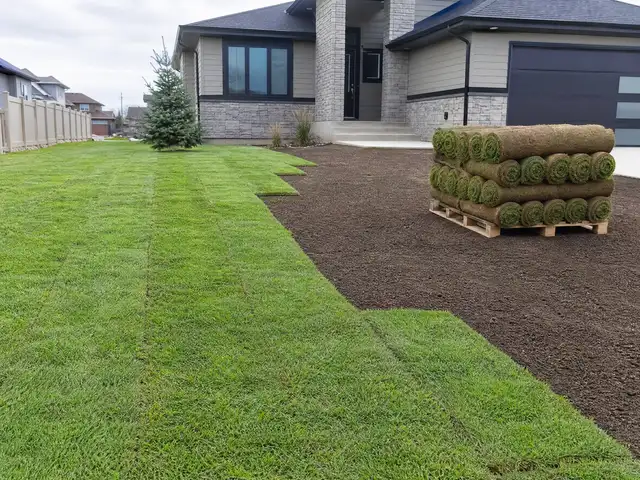
New sod lawns on properly prepared grade and real topsoil depth, not laid over builder clay.
Late May through September
Irrigation & Sprinklers
Sprinkler system design, installation, spring startups, and fall blowouts.
May through October
Yard Cleanup
Spring and fall yard cleanups with all debris hauled off the property.
April–May and September–October