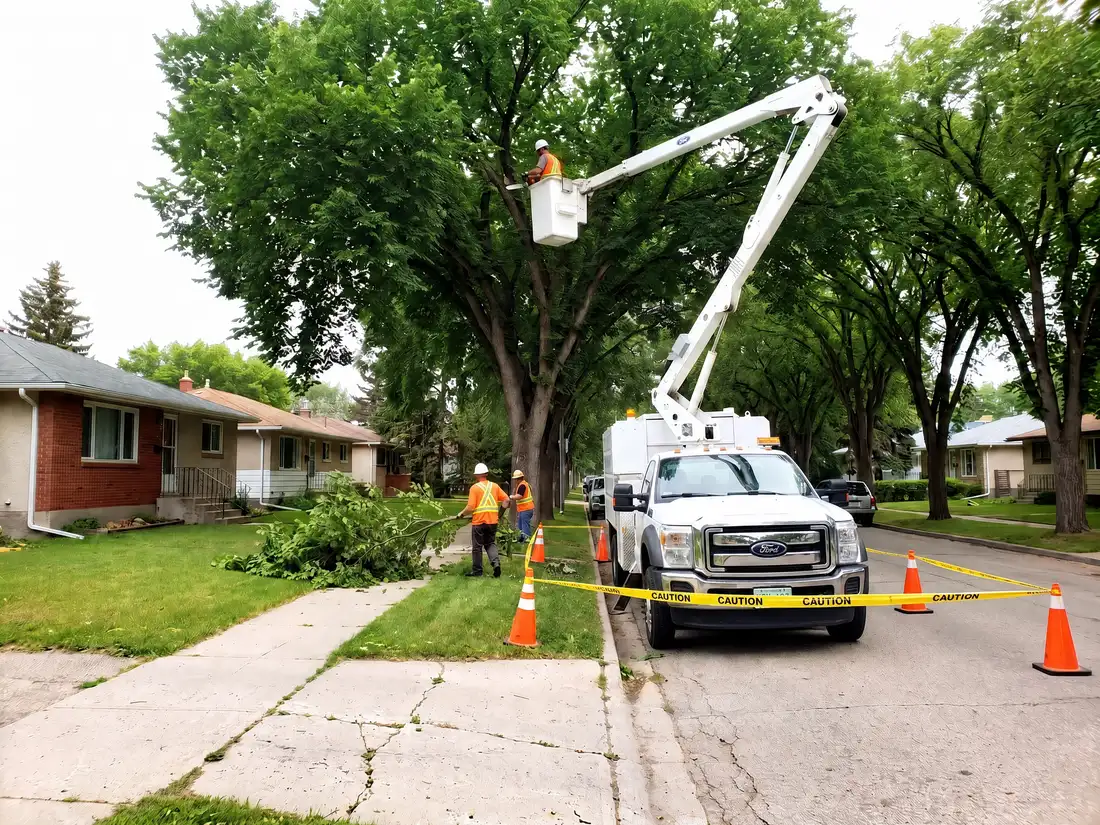
Year-round, with elm restrictions April–August
Tree Trimming & Removal in Saskatoon
Pruning, hazard removals, and stump grinding for prairie trees and shelterbelts.
We provide tree trimming, removal, and stump grinding for residential and acreage properties in Saskatoon and the surrounding communities, from structural pruning on young trees to taking down mature poplars and failing elms. Saskatoon has a large elm population under a provincial Dutch elm disease control program, which makes the timing of elm pruning a legal matter rather than a preference. Homeowners call us about limbs over a roof, storm damage, and trees that have outgrown their space.
What Is Involved in Tree Trimming and Removal?
Pruning starts with deciding what to take and why — deadwood, crossing limbs, branches over a roof or a power service, or structural cuts on a young tree to prevent problems later. Cuts are made at the branch collar so the tree can seal them properly. Topping a tree, which some outfits still offer, damages it permanently and produces weak regrowth that becomes a hazard.
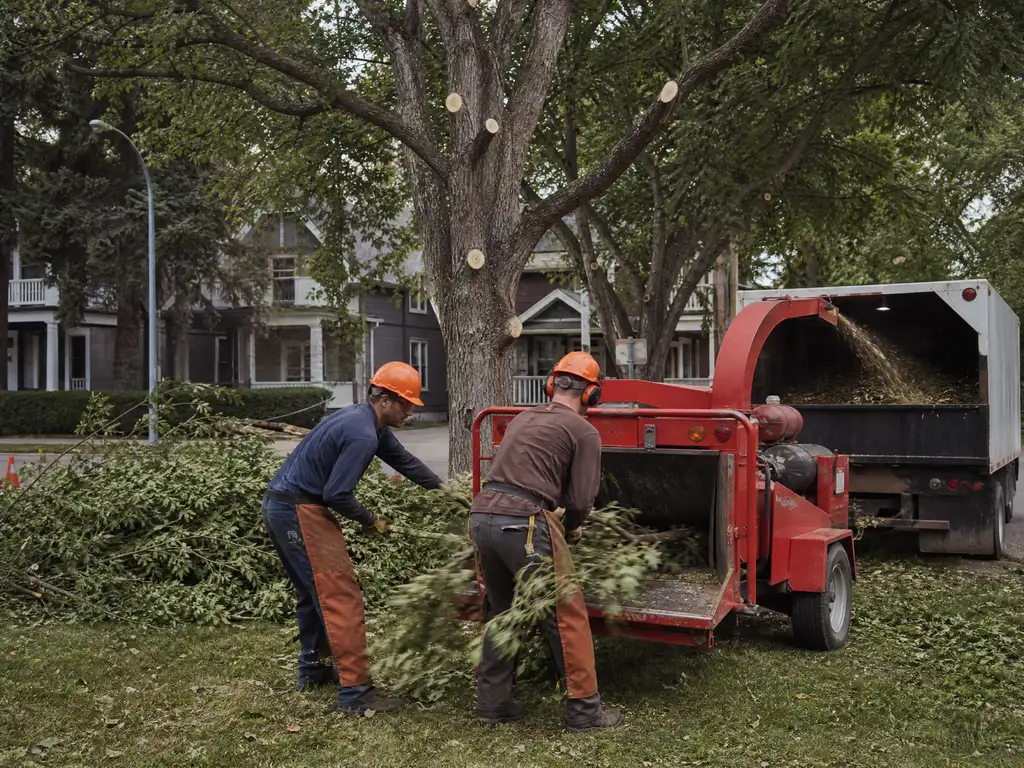
Removal on a Saskatoon lot is usually a sectional takedown rather than a felling, because there is rarely room to drop a mature tree in one piece. The tree comes down in controlled pieces, roped where anything below matters, and the wood and brush are cleared off the property.
Stump grinding is separate work and normally follows removal. The stump is ground below grade so the area can be turfed or planted over. Leaving a stump means an obstacle, a mowing nuisance, and a slow-rotting mass that attracts pests for years.
How Do I Know a Saskatoon Tree Needs Attention?
Deadwood in the canopy is the most common and most straightforward reason. Dead limbs come down eventually, and they choose their own timing — usually in the wind or under snow load. Dead branches over a driveway, a deck, or a walkway are the ones to deal with first.
Structural problems are the ones worth catching early: limbs rubbing against a roof or siding, branches growing into a power service, a narrow forked union that splits under load, or a tree leaning more than it used to. Saskatoon's older neighbourhoods have a lot of large mature poplars planted decades ago that are now at the end of their useful life and shedding limbs.
Signs of decline mean it is time for a proper look: thinning canopy, dieback starting at the top, fungal growth at the base, or — on an elm — sudden wilting and yellowing on one branch in midsummer, which is the classic Dutch elm disease signature and needs reporting rather than pruning.
Why Do Trees Fail in Saskatoon?
Species and age explain much of it. A great many Saskatoon yards were planted with fast-growing poplars and willows that reach full size quickly and then decline just as fast, and a large share of those trees are now well past their best. They are structurally weak, prone to dropping limbs, and unfortunately often planted close to houses.
Winter and wind do the rest. Heavy wet snow loading a canopy, a sharp freeze after a warm spell, and prairie wind on a tree that grew up sheltered by a neighbour's tree that has since been removed — all of these break limbs and split unions. Damage frequently appears in a tree that looked fine the previous season.
Dutch elm disease is the specific threat to Saskatoon's elms, and the reason the province restricts elm pruning between roughly April and August: fresh cuts during that window attract the beetles that carry the fungus from tree to tree. Saskatchewan has kept its elm population far better than most jurisdictions precisely because that restriction is taken seriously.
What Affects the Cost of Tree Removal in Saskatoon?
Size is the largest factor, and it scales steeply — a mature elm or poplar is not twice the job of a tree half its height, it is several times the job, because the weight, the rigging, and the volume of material to remove all increase disproportionately.
What is underneath and around the tree matters as much as the tree. A tree in an open yard where sections can be dropped freely is straightforward. The same tree over a house, a fence, a neighbour's greenhouse, or a power line has to come down in small controlled pieces, roped and lowered, and that is slow, skilled work.
Access decides whether equipment can be used. A back yard a bucket truck or a chipper can reach is far cheaper to work in than one where everything is climbed and carried out through a metre-wide gate.
Stump grinding, hauling versus leaving usable wood, and the condition of the tree all move the number. A dead or decayed tree is often more expensive to remove than a healthy one of the same size, because it cannot be safely climbed and the wood cannot be trusted to hold rigging.
Should the Tree Be Pruned, Removed, or Left Alone?
Prune when the tree is fundamentally sound and the problem is specific — deadwood, a limb over the roof, a branch in the power service, or structural correction on a young tree. Pruning is dramatically cheaper than removal and keeps a mature tree that would take thirty years to replace.
Remove when the tree is structurally compromised, in decline, dead, or so badly placed that pruning would have to be repeated indefinitely. A large poplar hanging over a house with recurring limb failure is a removal, not a pruning schedule. A tree that has to be cut back hard every second year to stay clear of a structure was planted in the wrong place, and removing it and replanting somewhere sensible costs less over ten years.
Leave it alone more often than people expect. Not every leaning tree is dangerous, and a healthy tree that simply looks untidy does not need cutting — Saskatoon's mature canopy is genuinely valuable and slow to replace. If you are unsure, get it looked at rather than removing it pre-emptively; we will tell you when the answer is that nothing needs doing.
Where Does This Fit With the Rest of the Yard?
Tree Trimming & Removal is rarely the only thing a property needs, and the order the work happens in matters more on Saskatoon clay than most people expect. Ground comes first: if water is pooling or running toward the house, grading and drainage is the job to do before anything you can see. Buried services like irrigation go in before surfaces, and sod goes down after the hard landscaping rather than before it.
The jobs most often quoted alongside this one are yard cleanup, landscape design and lawn care. Doing them in one visit is usually cheaper than bringing equipment back, because the mobilisation and the machine access are paid for once.
If you are planning the whole property rather than one job, start with a landscape design so the phases are sequenced before anything is built. Otherwise, the full service list covers everything we do, the cost guides explain what drives each price here, and the how-to guides are written for Saskatchewan timing rather than the milder-climate advice most search results give you. We work across Saskatoon and the surrounding area, including Warman, and every quote is free and given on site.
Get a free tree trimming & removal quote
Tell us what you need and where the property is. We come out, look at the ground, and give you a written scope and price — no charge and no obligation.
- Free on-site quotes across Saskatoon
- Prairie-hardy plantings that survive zone 3a winters
- Utility locates arranged before any digging
- Summer yard work and winter snow from one contractor
- Written scope before a shovel goes in the ground
Frequently Asked Questions
When can elm trees be pruned in Saskatchewan?
Not during the provincial elm pruning ban, which runs from roughly April to the end of August. Fresh cuts in that window attract the elm bark beetles that spread Dutch elm disease. Elm pruning is done outside that period, and it is a legal restriction rather than a guideline. Dead or hazardous elm work inside the ban period needs to go through the proper channel.
How much does tree removal cost in Saskatoon?
It is quoted per tree and varies enormously with size, what is underneath it, and access. A small tree in an open yard is a modest job; a mature elm over a house that must be sectioned and lowered piece by piece is many times that. Dead or decayed trees often cost more than healthy ones of the same size because they cannot be safely climbed.
Do I need a permit to remove a tree in Saskatoon?
Trees on private property are generally the owner's to manage, but trees on City boulevards and public land belong to the City of Saskatoon and cannot be removed or pruned by a homeowner. Elms are subject to provincial disease control rules regardless of where they stand. We confirm which applies before starting.
What are the signs of Dutch elm disease?
The classic signature is a branch whose leaves suddenly wilt, yellow, and turn brown in midsummer while the rest of the tree still looks healthy, often called flagging. It spreads through the tree quickly. A suspected case should be reported rather than pruned, and infected wood must not be moved or stored — elm firewood is the main way the disease travels.
When is the best time to prune trees in Saskatoon?
Late winter into early spring is ideal for most species — the tree is dormant, the structure is visible without leaves, and the ground is frozen enough to carry equipment without rutting a lawn. Elms are the exception and must be pruned outside the ban period. Dead or hazardous limbs can be removed at any time of year.
Should I remove the stump too?
Usually, yes, if you want to use the space. A stump is a mowing obstacle, a trip hazard, and a slow-rotting mass that can attract pests, and it prevents turfing or planting over the area. Grinding is quick and comparatively inexpensive once the equipment is already on site, which is why it makes sense to do it with the removal rather than later.
Can you take down a tree that is close to my house or power line?
Yes — that is standard sectional removal work, taking the tree down in controlled pieces that are roped and lowered rather than dropped. Anything genuinely in contact with a power service requires coordination with the utility, which we arrange rather than working around.
Is topping a tree ever a good idea?
No. Topping — cutting the main leaders back to stubs — permanently damages a tree, opens large wounds it cannot seal, and produces fast weak regrowth that is more hazardous than the original branches. If a tree is genuinely too large for its location, the honest answer is removal, not topping.
Do you clean up all the wood and brush?
Yes, everything is removed from the property as part of the job unless you want the wood left for firewood, which we are happy to do — with the exception of elm, which must not be stored or moved because it harbours the beetles that spread Dutch elm disease.
Can you work on shelterbelts on an acreage?
Yes. Shelterbelt thinning and renewal is regular work for us in the RM of Corman Park and around Warman, Osler, and Aberdeen. Older shelterbelts frequently need selective removal and replanting to keep functioning as a windbreak, since a row of dying mature trees stops doing the job it was planted for.
Related services
Most tree trimming & removal jobs in Saskatoon come with one or two of these attached — it is usually cheaper to do them in the same visit than to bring equipment back.
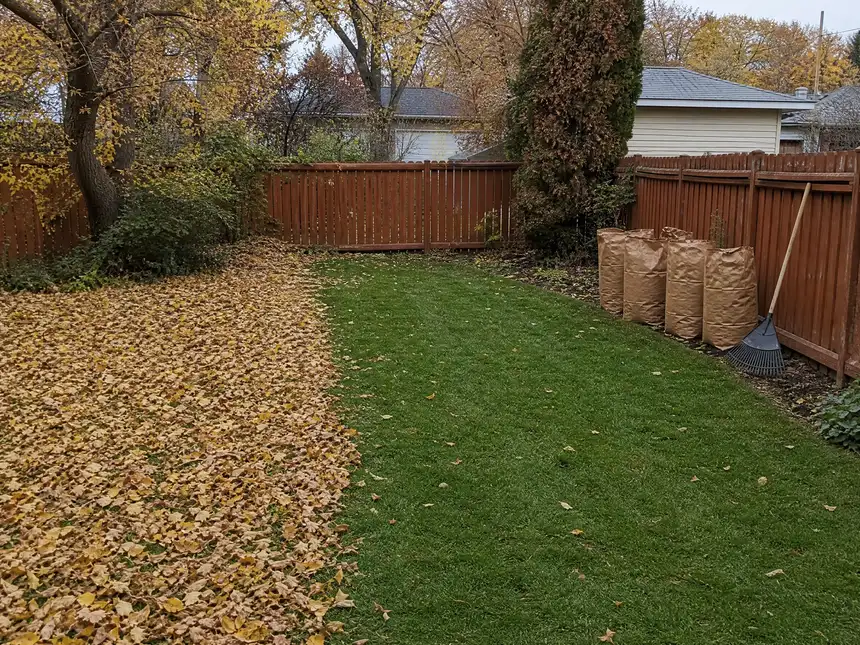
April–May and September–October
Yard Cleanup
Spring and fall yard cleanups with all debris hauled off the property.
See what it involves→
Landscape Design
Full yard plans with prairie-hardy planting, built around how you actually use the space.
Year-round (design); May–October (build)
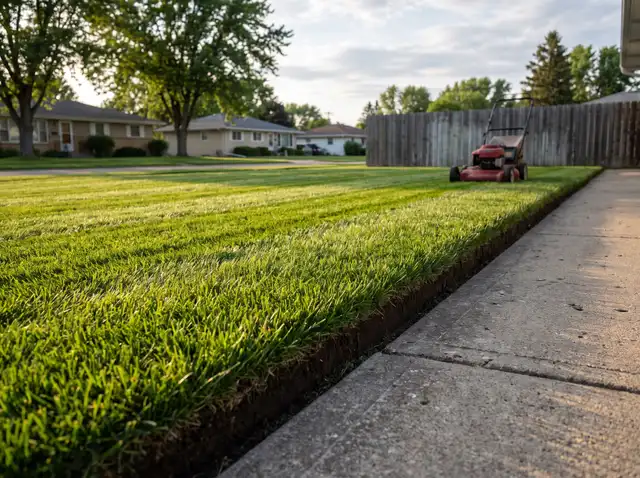
Lawn Care
Weekly mowing, trimming, and seasonal lawn maintenance across Saskatoon and area.
May through September
Excavation, Grading & Earthworks
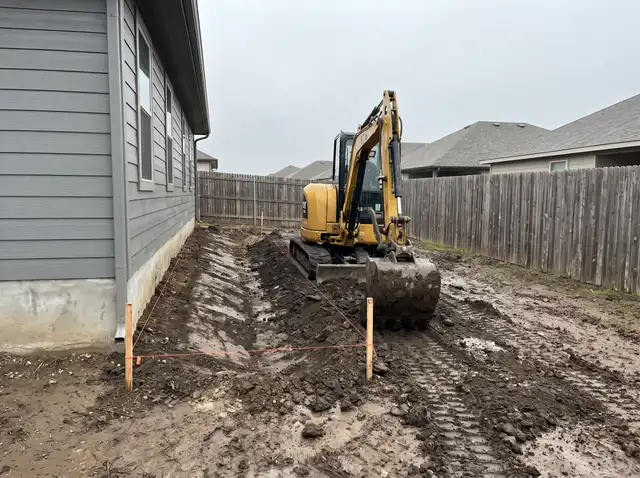
Yard grading, earthworks and drainage correction that moves water away from your foundation.
May through October
Snow Removal
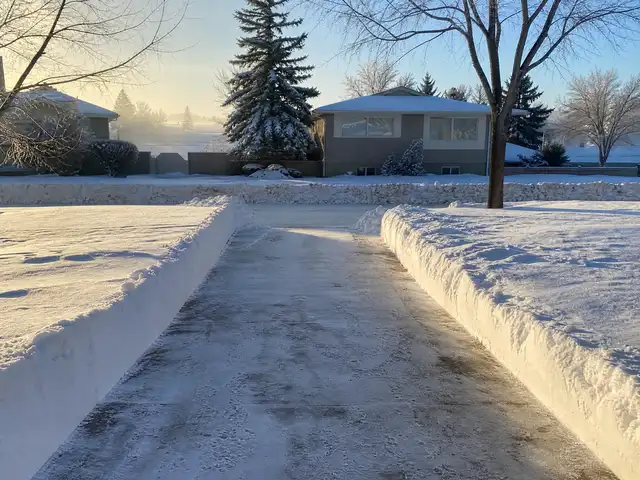
Season contracts for residential driveways, walks, and commercial lots across Saskatoon.
November through March