May and September
Lawn Aeration in Saskatoon
Core aeration that opens up Saskatoon clay so water, air, and roots can get down.
We provide core aeration for lawns in Saskatoon and the surrounding towns, pulling plugs of soil out of the turf so that water, air, and fertilizer can reach the root zone. Saskatoon lawns sit on heavy clay that compacts badly under normal use, and compaction is the single most common reason a well-watered lawn still looks drought-stressed. Homeowners book aeration to fix hard, thin, water-shedding turf rather than to treat a cosmetic problem.
What Happens During Core Aeration?
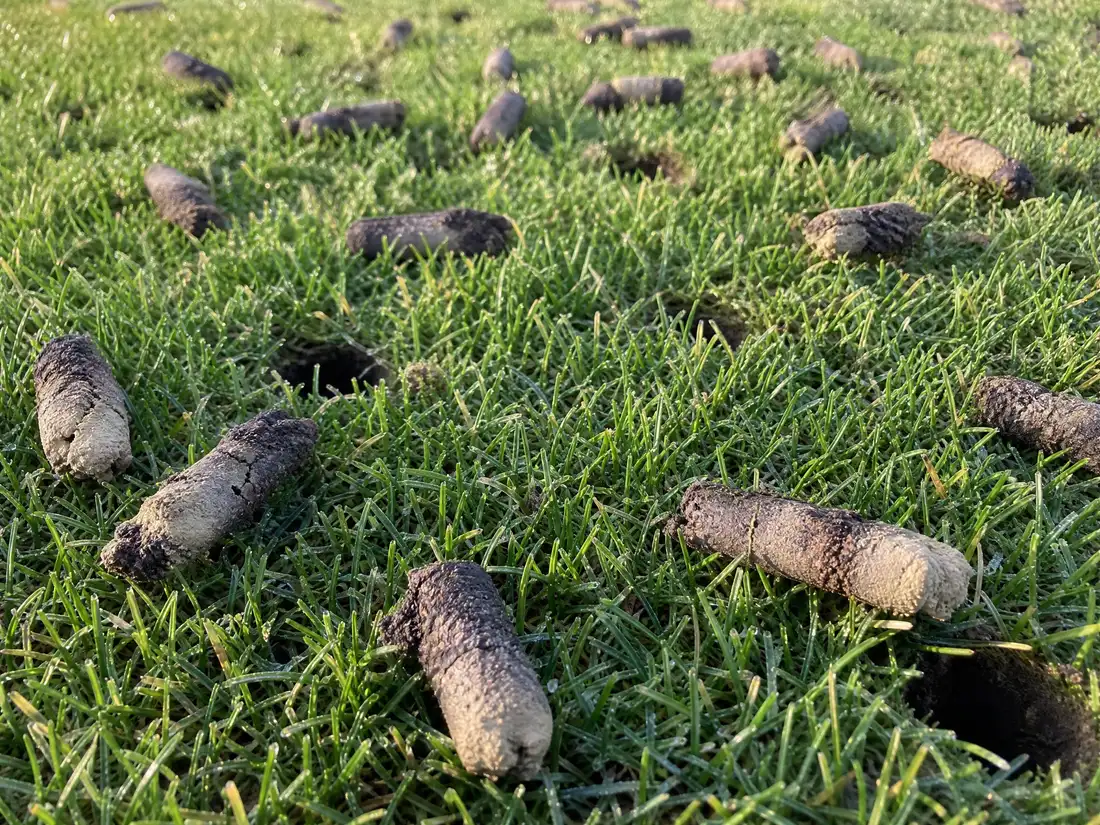
Core aeration runs a machine across the lawn that pulls thousands of small plugs of soil and thatch out of the ground and drops them on the surface. The holes left behind let water, air, and fertilizer reach the root zone directly instead of running off a compacted surface. On Saskatoon clay this is the difference between watering a lawn and watering the top half inch of it.
We leave the cores on the lawn rather than raking them up. They look untidy for a week or two and then break down in the rain and the mowing, returning soil and organic matter to the surface. Removing them throws away most of the benefit and adds cost for a purely cosmetic gain.
Aeration pairs naturally with overseeding, and on a thin lawn it is worth doing them together. The holes give seed direct soil contact, which is the thing seed broadcast onto a hard clay surface never gets — most of it simply sits there and feeds the birds.
How Do I Know My Saskatoon Lawn Needs Aerating?
The clearest sign is water behaviour. If you run a sprinkler on your Saskatoon lawn and water pools or runs toward the driveway rather than soaking in, the surface is sealed and the lawn is compacted. A lawn that will not accept water is not a watering problem no matter how long the sprinkler runs.
The second sign is physical resistance. Push a screwdriver into the lawn after a good watering; in decent soil it goes in several inches with hand pressure, and in badly compacted Saskatoon clay it stops after an inch. Thin turf over hard ground, especially along paths people actually walk, points the same way.
High-traffic lawns need it most and most often — yards with kids, dogs, a well-worn route to the back gate, or anywhere a vehicle has been parked on the grass. New-build lots in Saskatoon, Warman, and Martensville are frequently compacted from the start by the equipment that built the house.
Why Does Soil Compact So Badly in Saskatoon?
Saskatoon sits on heavy clay soil, and clay compacts in a way sandy soil does not. Clay particles are flat and fine, so pressure presses them into layers that exclude the air spaces roots and water need. Once that structure collapses it does not recover on its own within a lawn's lifetime.
The freeze-thaw cycle here helps at the surface and does nothing at depth. People assume a Saskatoon winter breaks up compaction, and the top inch does get some frost heave, but the compacted layer four to six inches down — which is where roots actually need to go — is untouched by it.
Thatch adds a second layer to the problem on lawns that have been over-fertilized or never aerated. A thatch mat more than about half an inch thick sheds water on its own, so you can end up with a lawn that rejects water twice over: once at the thatch and once at the compacted clay beneath it.
What Affects the Cost of Aeration in Saskatoon?
Lawn area is the primary factor, since aeration is machine work measured by ground covered. Unlike mowing, obstacles matter somewhat less — the machine works around beds and trees without the trimming time that drives mowing costs.
Access is the practical constraint that changes the price. An aerator is heavy, and a back yard reachable only through a narrow gate or up a flight of steps takes materially longer to service than one with a wide side gate. Some yards genuinely cannot take the standard machine and need a smaller unit.
Whether you add overseeding and topdressing changes the figure meaningfully, and on a thin lawn it is the combination that produces the result rather than the aeration alone. Seed and soil are real material costs on top of the machine time.
Number of passes matters on badly compacted ground. One pass is standard; a lawn that has never been aerated on hard Saskatoon clay benefits from two passes in different directions, which roughly doubles the machine time.
Should I Aerate, Power Rake, or Just Overseed?
Aerate when the problem is hardness and water running off — that is compaction, and core aeration is the only one of the three that addresses it. This is the common case on Saskatoon clay and it is what we recommend most often.
Power raking addresses thatch, which is a different problem: a spongy mat of dead material sitting between the grass and the soil. If your Saskatoon lawn feels bouncy underfoot rather than hard, power raking may be the right call. It is genuinely hard on a lawn, though, and it is over-sold — most Saskatoon lawns have a thatch layer well under the half inch that would justify it.
Overseed alone only when the soil underneath is fine and the lawn is simply thin — after a dog, a wading pool, or a season of shade. Broadcasting seed onto compacted clay without aerating first wastes the seed, because it never makes soil contact. When in doubt, aerate and overseed together; that combination is rarely the wrong answer on a Saskatoon lawn.
Where Does This Fit With the Rest of the Yard?
Lawn Aeration is rarely the only thing a property needs, and the order the work happens in matters more on Saskatoon clay than most people expect. Ground comes first: if water is pooling or running toward the house, grading and drainage is the job to do before anything you can see. Buried services like irrigation go in before surfaces, and sod goes down after the hard landscaping rather than before it.
The jobs most often quoted alongside this one are lawn care, weed control & fertilizing and sod installation. Doing them in one visit is usually cheaper than bringing equipment back, because the mobilisation and the machine access are paid for once.
If you are planning the whole property rather than one job, start with a landscape design so the phases are sequenced before anything is built. Otherwise, the full service list covers everything we do, the cost guides explain what drives each price here, and the how-to guides are written for Saskatchewan timing rather than the milder-climate advice most search results give you. We work across Saskatoon and the surrounding area, including Warman, and every quote is free and given on site.
Get a free lawn aeration quote
Tell us what you need and where the property is. We come out, look at the ground, and give you a written scope and price — no charge and no obligation.
- Free on-site quotes across Saskatoon
- Prairie-hardy plantings that survive zone 3a winters
- Utility locates arranged before any digging
- Summer yard work and winter snow from one contractor
- Written scope before a shovel goes in the ground
Frequently Asked Questions
When should you aerate your lawn in Saskatchewan?
The two windows are spring, once the ground has thawed and dried enough to carry the machine — usually mid-May in Saskatoon — and early fall, from late August into September. Fall is the better of the two, because the lawn has the whole cool, moist end of the season to fill in the holes and recover, and it pairs perfectly with overseeding and the fall fertilizer application.
How often should a Saskatoon lawn be aerated?
Once a year is right for most Saskatoon lawns, given the clay. A low-traffic lawn on better soil can go every second year. A high-traffic lawn, a new-build lot compacted by construction equipment, or one where water visibly runs off benefits from twice a year, spring and fall, until it improves.
Should I rake up the plugs after aeration?
No. Leave them. They break down within a couple of weeks under normal watering and mowing and return soil and organic matter to the lawn surface, which is part of the benefit. Raking them off costs you money and throws away the topdressing you just paid to produce.
How long does a lawn take to recover from aeration?
The lawn is usable immediately and looks normal again in about two weeks once the cores have broken down. If it was overseeded at the same time, expect to see new grass germinating in one to three weeks depending on temperature and how consistently it is watered.
Can I aerate my own lawn with a rented machine?
Yes, and for a small flat lawn it is a reasonable weekend job. The two things people underestimate are the weight of the machine — getting it into a back yard through a standard gate is the hard part — and the need to water the lawn thoroughly the day before, since a core aerator will barely penetrate dry Saskatoon clay.
What is the difference between core aeration and spike aeration?
Core aeration removes plugs of soil, creating actual space. Spike aeration just pushes a spike into the ground, which displaces soil sideways and compacts the walls of the hole. On clay soil like Saskatoon's, spike aeration can make compaction slightly worse. Core aeration is the one worth paying for.
Do I need to water before aeration?
Yes, and this is the step that decides whether the job works. The lawn should be moist to a depth of a few inches, so water thoroughly a day or two beforehand unless there has been recent rain. A core aerator on bone-dry Saskatoon clay will bounce and pull short, shallow plugs.
Will aeration damage my sprinkler heads or invisible fence?
It can, which is why we ask you to mark irrigation heads, valve boxes, shallow utility lines, and any pet fence wire before we start. If you have an irrigation system we installed we already have the layout, but for a system someone else put in we need it flagged.
Should I aerate before or after fertilizing?
Aerate first, then fertilize. The holes let the fertilizer reach the root zone instead of sitting on a compacted surface, which is exactly the point. The same order applies to overseeding — aerate, then seed, so the seed drops into the holes and gets real soil contact.
Is aeration worth it on a brand new lawn?
Not in its first year if the soil was properly prepared before the sod went down. But if the sod was laid over compacted builder subsoil — which is common on new lots in Saskatoon, Warman, and Martensville — then aeration in the second season is one of the most useful things you can do, because the lawn is rooting into ground that was never opened up.
Related services
Most lawn aeration jobs in Saskatoon come with one or two of these attached — it is usually cheaper to do them in the same visit than to bring equipment back.
May through September
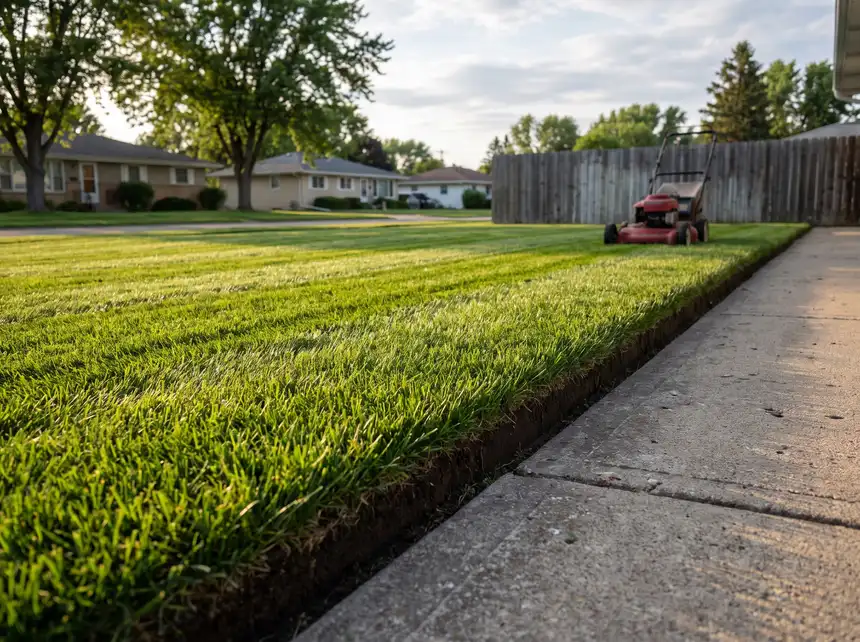
Lawn Care
Weekly mowing, trimming, and seasonal lawn maintenance across Saskatoon and area.
See what it involves→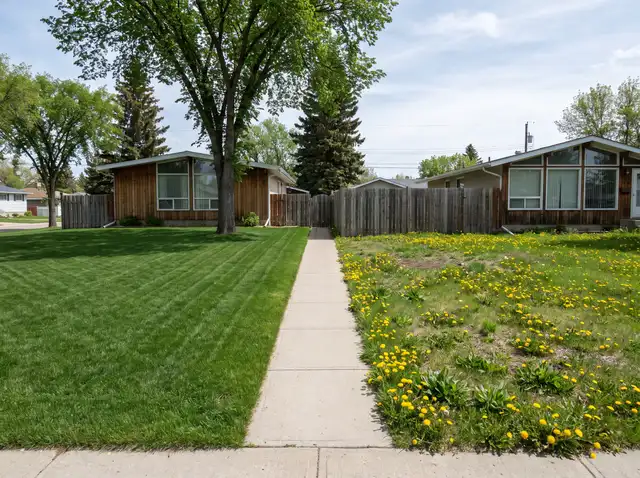
Weed Control & Fertilizing
Scheduled weed control and fertilizer programs built around the Saskatchewan season.
May through September
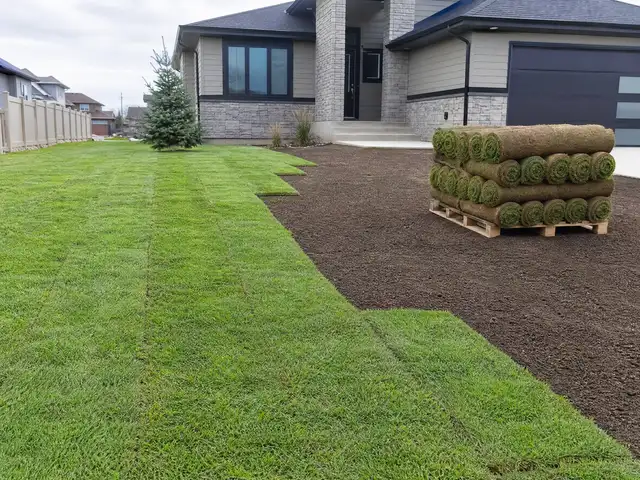
Sod Installation
New sod lawns on properly prepared grade and real topsoil depth, not laid over builder clay.
Late May through September
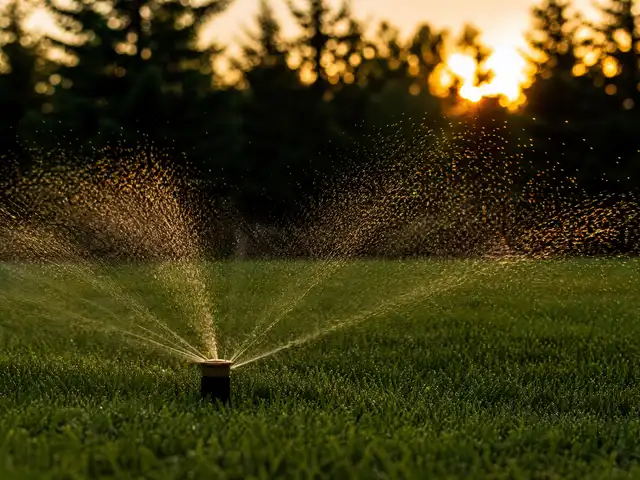
Irrigation & Sprinklers
Sprinkler system design, installation, spring startups, and fall blowouts.
May through October
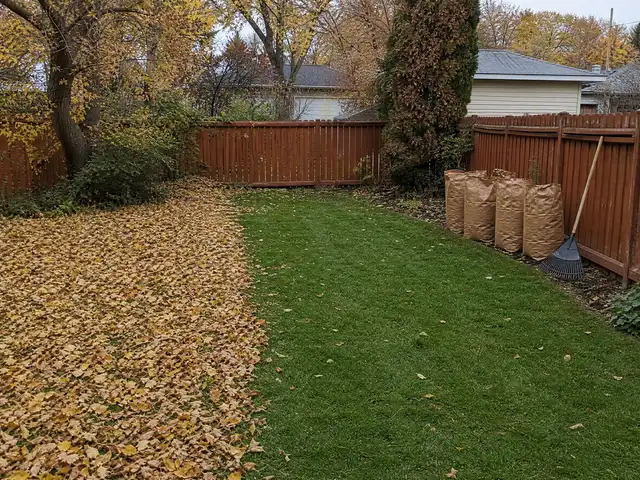
Yard Cleanup
Spring and fall yard cleanups with all debris hauled off the property.
April–May and September–October