May through October
Irrigation & Sprinklers in Saskatoon
Sprinkler system design, installation, spring startups, and fall blowouts.
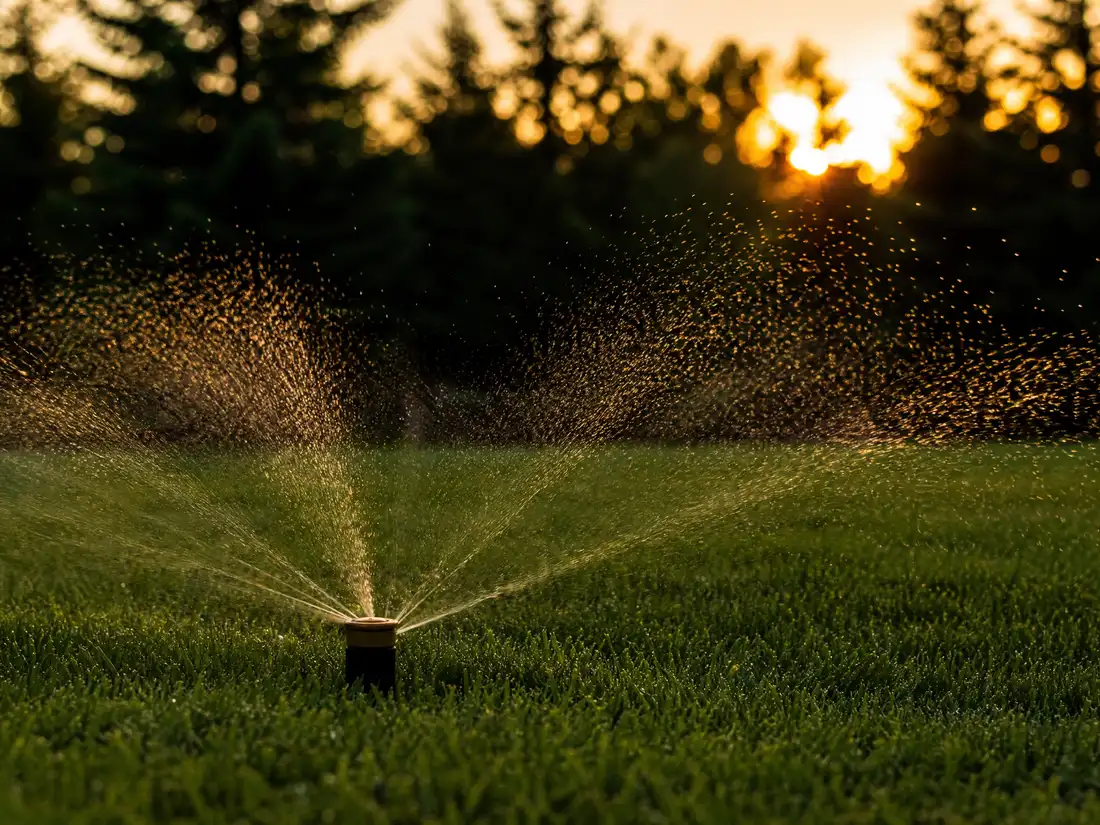
We design, install, and service in-ground irrigation systems for residential and acreage properties in Saskatoon and the surrounding communities, including the spring startup and the fall blowout that a prairie system cannot go without. Saskatoon receives roughly 357 mm of precipitation a year and most of it does not arrive when the lawn needs it, so irrigation is what keeps turf and plantings alive through July. Customers want deep, even watering without dragging hoses.
What Is Involved in Installing a Sprinkler System in Saskatoon?
An irrigation installation starts with the water supply, because that is what constrains everything else. We measure available pressure and flow at the property and design zones that fit it — trying to run more heads than the supply supports produces a system that waters everything badly rather than anything well.
The lines are trenched or pulled through the yard, heads are set at grade so a mower passes over them, and zones are separated by what they water rather than by geography. Lawn, beds, and any high-exposure area belong on different zones because they need genuinely different amounts of water. The controller and backflow prevention go in last.
On Saskatoon systems the drainage design is not optional. Everything has to be able to blow out cleanly in the fall, so lines are laid with that in mind from the start. A system that traps water somewhere will crack a line during the first hard freeze, and finding it means digging.
When Is Irrigation Worth Installing on a Saskatoon Property?
The case is strongest on larger Saskatoon lots and acreages, where hand watering is a genuine time commitment and hose reach becomes a design problem in itself. Once a property is large enough that watering it properly takes an hour of moving sprinklers, an irrigation system stops being a luxury.
It is also worth it when you have invested in the yard. A new sod lawn, established beds, or specimen trees represent real money, and losing them to a two-week absence in a dry Saskatoon July is expensive. Irrigation is insurance on that investment as much as it is convenience.
It is least worth it on a small city lot with a simple lawn and someone home to water it, where a hose and a timer do the same job. We will tell you when that is the case rather than selling a system a property does not need.
Why Do Irrigation Systems Fail in Saskatoon?
Freeze damage from an incomplete fall blowout is the leading cause of irrigation failure on the prairies, and it is almost entirely preventable. Water left anywhere in a line expands when it freezes and splits pipe, cracks fittings, or destroys valve bodies. Damage appears the following spring, often as a mystery wet patch, and repairs mean excavation.
Poor coverage design is the second. Heads placed too far apart leave dry rings between them, and because sprinkler patterns are meant to overlap, a system that looks reasonable on paper can water in stripes. The lawn tells you: alternating green and stressed bands across an area on the same zone.
The third is pressure mismatch — too many heads on one zone for the available supply, so every head throws short. This is a design error rather than a maintenance one, and it cannot be fixed by adjusting heads. It usually comes from someone extending an existing system without recalculating what the supply can carry.
What Affects the Cost of an Irrigation System in Saskatoon?
Zone count is the main driver, and zone count comes from area and available water supply rather than from preference. A large property on modest pressure needs more zones than the same area on strong supply, because each zone can only run as many heads as the supply feeds properly.
Property type matters enormously. A city lot on municipal supply is straightforward. An acreage in Corman Park running off a well or cistern needs pump considerations, storage, and often a completely different design approach, and it is priced accordingly.
Whether the yard already exists changes the labour. Installing irrigation into an established lawn means trenching or pulling lines through turf and repairing behind, while installing during a new landscape build costs far less because the ground is already open. If you are planning both, doing them together saves real money.
Ongoing costs are small but real and worth budgeting: an annual spring startup and an annual fall blowout, every year, for the life of the system.
Do I Need a Full System, a Few Zones, or Just Better Hose Watering?
A full in-ground system makes sense for larger properties, for yards with a mix of lawn and beds that need different watering, and for anyone who travels during the summer. It is the most expensive option up front and the only one that waters correctly without anyone present.
A partial system covering only the lawn, or only the front yard, is a legitimate middle path and one we install often in Saskatoon. It covers the area that suffers most in July at a fraction of the cost, and it can be extended later if the zones were designed with that in mind from the start.
Hose and timer watering is genuinely adequate for a small city lot, and we would rather say so than install something unnecessary. What it is not adequate for is new sod during establishment — that needs consistent, heavy watering on a schedule, and that is the one situation where hand watering most often fails.
Where Does This Fit With the Rest of the Yard?
Irrigation & Sprinklers is rarely the only thing a property needs, and the order the work happens in matters more on Saskatoon clay than most people expect. Ground comes first: if water is pooling or running toward the house, grading and drainage is the job to do before anything you can see. Buried services like irrigation go in before surfaces, and sod goes down after the hard landscaping rather than before it.
The jobs most often quoted alongside this one are sod installation, lawn care and landscape design. Doing them in one visit is usually cheaper than bringing equipment back, because the mobilisation and the machine access are paid for once.
If you are planning the whole property rather than one job, start with a landscape design so the phases are sequenced before anything is built. Otherwise, the full service list covers everything we do, the cost guides explain what drives each price here, and the how-to guides are written for Saskatchewan timing rather than the milder-climate advice most search results give you. We work across Saskatoon and the surrounding area, including Warman, and every quote is free and given on site.
Get a free irrigation & sprinklers quote
Tell us what you need and where the property is. We come out, look at the ground, and give you a written scope and price — no charge and no obligation.
- Free on-site quotes across Saskatoon
- Prairie-hardy plantings that survive zone 3a winters
- Utility locates arranged before any digging
- Summer yard work and winter snow from one contractor
- Written scope before a shovel goes in the ground
Frequently Asked Questions
When do sprinkler systems need to be blown out in Saskatoon?
Before the first hard freeze, which in Saskatoon means booking for late September into October rather than leaving it to chance. Waiting for the first real cold snap is how systems get damaged, because a single hard overnight freeze on a line with water in it is enough to split it.
What does a sprinkler blowout involve?
Compressed air is run through each zone in turn to push every bit of standing water out of the lines and heads, and the backflow device and controller are shut down for the season. It has to be done zone by zone at the correct pressure — too much air pressure damages heads, and too little leaves water behind.
When should I start my irrigation system in the spring?
Once the risk of hard frost has passed and the ground has thawed enough that lines are not still frozen, generally in May in Saskatoon. Starting a system while lines are still frozen can damage them. The startup includes charging the system, checking every head, and adjusting coverage.
How much does an irrigation system cost in Saskatoon?
It is priced by zone, and the total depends on lot size, water supply, and whether the yard already exists. Installing into an established lawn costs meaningfully more than installing during a new landscape build, because the ground has to be opened and repaired. Acreage systems on a well are a different category again.
How long should I run each zone?
Longer and less often than most people do — deep watering two or three times a week beats a short daily cycle, because it drives roots down instead of keeping them in the top inch. Exact run times depend on head type and soil, and we set them at startup and adjust as the season changes.
Will an irrigation system save me water?
It can, if it is well designed and scheduled sensibly, because it applies water evenly and at the right time of day rather than in the heat when much of it evaporates. A badly scheduled system left on a fixed daily program through a rainy stretch uses far more than hand watering would.
Can you add irrigation to a yard that is already landscaped?
Yes. Lines can be pulled through an established lawn with a machine that minimizes surface disturbance, and the turf recovers within a few weeks. It costs more than installing during a new build, and beds and hardscaping constrain the routing, but it is routine work.
What happens if I skip the fall blowout one year?
You may get away with it in a mild fall, and you may split multiple lines and valve bodies. The damage is invisible until spring, when it shows up as a wet patch or a zone that will not pressurize, and repairs mean digging up the yard to find the break. The blowout costs a small fraction of that.
Do I need backflow prevention?
Yes. Any system connected to a potable water supply requires backflow prevention to stop irrigation water being drawn back into the drinking water line, and it is a code requirement rather than an option. It is tested and serviced as part of routine system maintenance.
Can you fix a system someone else installed?
Yes, and a good share of our irrigation work is repairs and redesigns on existing systems — freeze splits, heads that have been mown over, zones that never had the pressure to run properly. If the original design has more heads on a zone than the supply can feed, we will tell you that rather than adjusting heads that cannot be fixed by adjustment.
Related services
Most irrigation & sprinklers jobs in Saskatoon come with one or two of these attached — it is usually cheaper to do them in the same visit than to bring equipment back.
Late May through September
Sod Installation
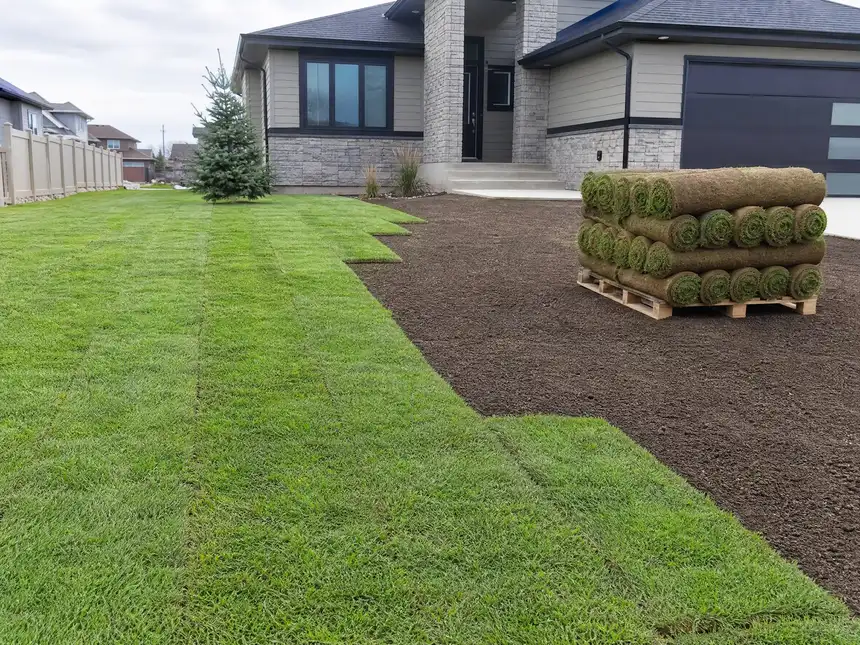
New sod lawns on properly prepared grade and real topsoil depth, not laid over builder clay.
See what it involves→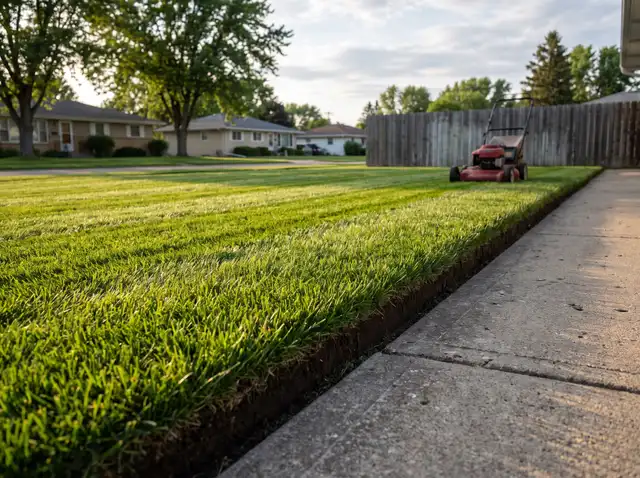
Lawn Care
Weekly mowing, trimming, and seasonal lawn maintenance across Saskatoon and area.
May through September

Landscape Design
Full yard plans with prairie-hardy planting, built around how you actually use the space.
Year-round (design); May–October (build)
Excavation, Grading & Earthworks
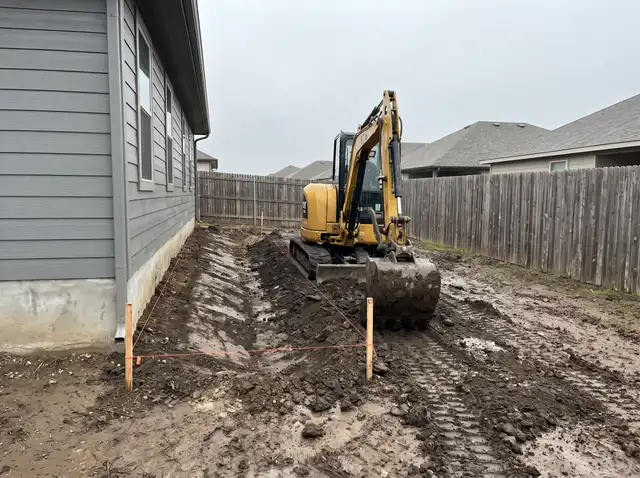
Yard grading, earthworks and drainage correction that moves water away from your foundation.
May through October
Weed Control & Fertilizing
Scheduled weed control and fertilizer programs built around the Saskatchewan season.
May through September