May through October
Paving Stones & Patios in Saskatoon
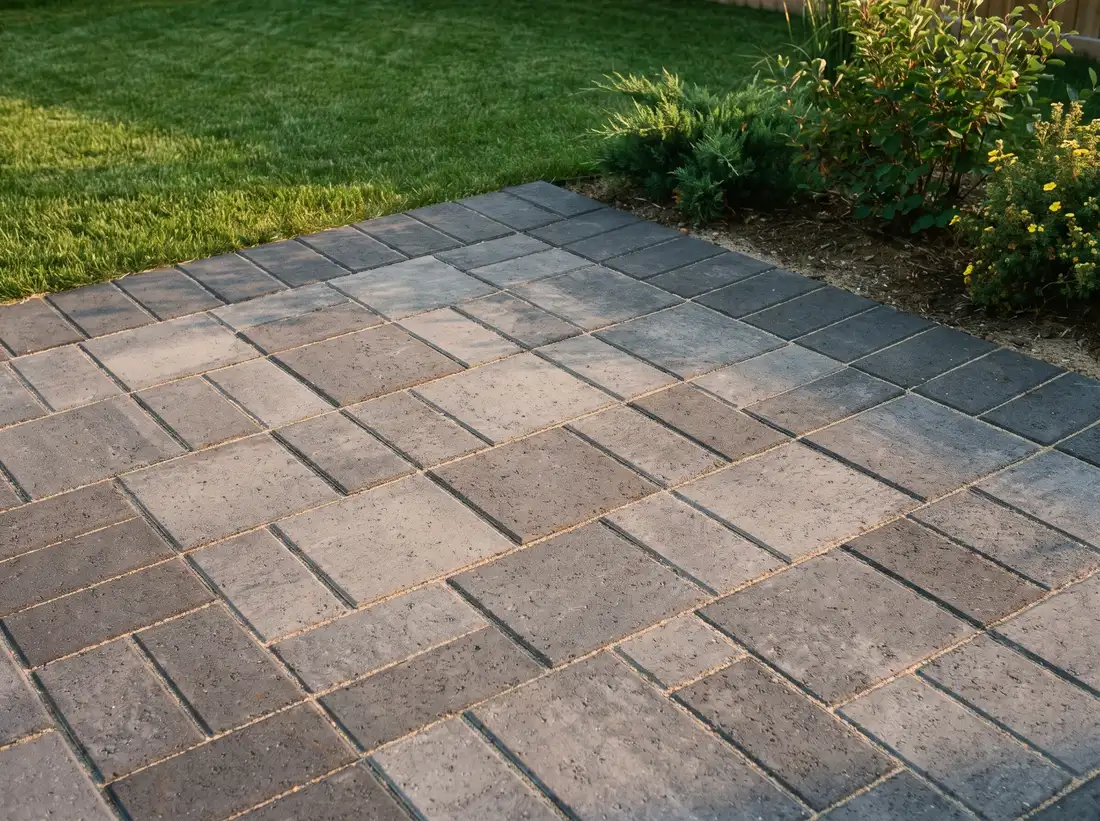
Paving stone patios, walkways, and driveways built on a base that handles prairie frost.
We build paving stone patios, front walks, and driveways for homeowners in Saskatoon and the surrounding communities, on excavated and compacted bases designed for freeze-thaw ground movement. Saskatoon sits on heavy clay and goes through a hard annual frost cycle, so the difference between stonework that stays flat for twenty years and stonework that heaves into a trip hazard is entirely in the base underneath it. Customers hire us for the part that does not show.
How Is a Paving Stone Patio Built in Saskatoon?
The work starts with excavation, and on Saskatoon clay we dig deeper than a contractor would in sandier ground. The hole has to hold enough compacted granular base to spread load and, more importantly, to drain — because water trapped under stonework in a prairie winter is what lifts it.
The base goes in as compacted lifts rather than one deep pour, each one packed before the next goes on. Compaction in layers is slower and it is the step that gets skipped when a quote is cut to win a job. A base dumped in at full depth and rolled once looks identical on the day and settles unevenly within two winters.
Then a screeded bedding layer, the stones laid to pattern, a cut border, and edge restraint around the whole perimeter. Finally the joints are filled with polymeric sand and the surface is compacted and set. The edge restraint is what stops the field of stones from spreading sideways over time, and it is not optional in this climate.
When Should You Choose Paving Stones Over Concrete?
Paving stones are the better choice in Saskatoon precisely because the ground moves. A concrete slab is one rigid piece, so when frost lifts part of it the slab cracks, and a cracked slab is repaired by replacing it. A paving stone surface is thousands of small pieces over a flexible base, so it moves with the ground rather than against it, and individual stones can be lifted and relaid.
They also make sense when you want the surface to be serviceable. If a utility line needs to be reached, stones come up and go back down. Anything under a concrete slab requires breaking the slab.
The common Saskatoon jobs are a rear patio off a deck or door, a front walk from the drive to the door, and a full driveway replacement. New-build lots in Warman and the newer Saskatoon subdivisions typically get their hard landscaping in the second or third summer, once the lot has finished settling.
Why Does Paving Stone Heave or Sink in Saskatoon?
Frost heave is the defining problem for hardscaping in Saskatoon, and it is a water problem rather than a cold problem. Water held in the ground beneath a patio expands as it freezes and lifts whatever sits above it. If that water is held unevenly — more in one area than another — the surface lifts unevenly, and that is what produces the trip edges and rocking stones people notice in year three.
Insufficient base depth is the direct cause in most cases. A base too shallow for the local frost depth cannot isolate the surface from ground movement, and on clay that holds water rather than shedding it the effect is amplified. This is the single most common shortcut in a competitive quote and it is invisible on the day of completion.
Poor drainage design is the other half. A patio that sits in a low spot, or a walk that collects roof runoff because nothing directs the downspout away, is being asked to sit in saturated ground every spring. No base survives that indefinitely. Sunken areas usually mean the base was under-compacted; heaved areas usually mean water and frost.
What Affects the Cost of a Paving Stone Patio in Saskatoon?
Area sets the baseline, and the stone you choose changes it substantially — a basic rectangular paver and a large-format or textured premium stone are genuinely different price points for identical labour.
The excavation and base are frequently the larger half of a Saskatoon quote. Depth is dictated by use and by the ground: a driveway carrying vehicles needs a deeper, heavier base than a garden walk, and clay needs more than sand does. This is the number to compare between quotes, because it is where they differ.
Access decides equipment. A front yard a machine can reach is efficient; a fenced back yard reachable only through a gate means every cubic metre of spoil out and base in moves by wheelbarrow, which can add days.
Design complexity is real cost: curves, circles, borders, inlays, and steps all mean cutting, and cutting is slow. A simple rectangle with a soldier course is dramatically cheaper per square foot than a curved patio with a contrasting inlay. Steps and any grade change add more again.
Should I Build a Patio, a Deck, or Just Pour Concrete?
Choose paving stones when the surface is close to grade, when you want it to last through decades of prairie frost, and when you want the ability to lift and repair a section rather than replace the whole thing. At ground level in Saskatoon, stone outperforms concrete on longevity for exactly the reasons above.
Choose a deck when you need to get up off the ground — a walkout at door height, a sloped yard where levelling to grade would mean a retaining wall, or a view worth being raised for. Building a stone patio on a significant slope means engineering the grade first, and at that point a deck is often both cheaper and better.
Choose poured concrete when the budget is the deciding factor and the area is simple, accepting that it will eventually crack in this climate and that repair means replacement. It is a legitimate choice for a garage pad or a utility area. For a front walk that is the first thing anyone sees, stone is the better long-term spend — and if you are weighing the numbers, our paver patio cost breakdown lays out what actually drives them.
Where Does This Fit With the Rest of the Yard?
Paving Stones & Patios is rarely the only thing a property needs, and the order the work happens in matters more on Saskatoon clay than most people expect. Ground comes first: if water is pooling or running toward the house, grading and drainage is the job to do before anything you can see. Buried services like irrigation go in before surfaces, and sod goes down after the hard landscaping rather than before it.
The jobs most often quoted alongside this one are retaining walls, excavation, grading & earthworks and deck building. Doing them in one visit is usually cheaper than bringing equipment back, because the mobilisation and the machine access are paid for once.
If you are planning the whole property rather than one job, start with a landscape design so the phases are sequenced before anything is built. Otherwise, the full service list covers everything we do, the cost guides explain what drives each price here, and the how-to guides are written for Saskatchewan timing rather than the milder-climate advice most search results give you. We work across Saskatoon and the surrounding area, including Warman, and every quote is free and given on site.
Get a free paving stones & patios quote
Tell us what you need and where the property is. We come out, look at the ground, and give you a written scope and price — no charge and no obligation.
- Free on-site quotes across Saskatoon
- Prairie-hardy plantings that survive zone 3a winters
- Utility locates arranged before any digging
- Summer yard work and winter snow from one contractor
- Written scope before a shovel goes in the ground
Frequently Asked Questions
How much does a paver patio cost in Saskatoon?
It is priced per square foot installed, and the range is wide because the base and the stone selection move it so much. A simple rectangular patio in a basic paver with machine access is at the bottom of the range; a curved patio in premium large-format stone in a gated back yard is at the top. The excavation and base are usually the larger share of the total.
Will paving stones heave in a Saskatoon winter?
Properly built, they move with the ground rather than against it and settle back — that flexibility is the main reason stone outperforms concrete here. Heaving that produces permanent trip edges is a base failure, almost always from insufficient depth or trapped water, not an inherent property of paving stone.
How deep does the base need to be?
Deeper on Saskatoon clay than most quotes assume, and deeper for a driveway than a walkway. There is no single number that fits every job — it depends on the use, the ground, and the drainage. What matters is that your contractor can tell you the depth they are pricing and why, and that you compare that number rather than only the finished price.
When is the best time of year to build a patio in Saskatoon?
Anywhere from May through October once the frost is out and the ground can be worked and compacted. Late-season builds are fine — the base does not care what month it goes in. Spring is the busiest booking period, so a fall build often means a shorter wait.
How long does a paving stone patio last?
Decades on a properly built base. The stones themselves outlast the base by a wide margin. When a stone surface does need attention after twenty years, it is usually a section lift and relay rather than a full replacement, which is a fraction of the original cost.
Do paving stones need sealing?
Not structurally. Sealing is about appearance and stain resistance — it deepens the colour and makes spills easier to clean off. It has to be redone periodically. Plenty of Saskatoon patios are never sealed and last just as long.
What is polymeric sand and do I need it?
It is the jointing sand between the stones, mixed with a binder that sets when wetted. It resists washout and slows weed growth in the joints considerably compared to plain sand. On a Saskatoon patio it is worth having, and it needs topping up every several years as it wears.
Can you build a paving stone driveway?
Yes, and it holds up well here, but it needs a substantially deeper and heavier base than a patio because it carries vehicle loads. A driveway built on a patio-depth base will rut where the tires track. It is a bigger excavation job and priced accordingly.
Can I put a patio in over my existing concrete?
Sometimes, if the concrete is sound, well drained, and at a workable elevation — laying over it avoids the demolition cost. But if the slab is already cracked and heaved, the problem underneath it has not gone away and the new surface will follow the old one. In that case the slab comes out.
How long does the job take?
A straightforward residential patio is typically several days to a week depending on size and access, with the excavation and base taking most of it. Wet weather stops work, because clay that is too wet cannot be compacted properly and compacting it anyway defeats the entire purpose.
Related services
Most paving stones & patios jobs in Saskatoon come with one or two of these attached — it is usually cheaper to do them in the same visit than to bring equipment back.
May through October
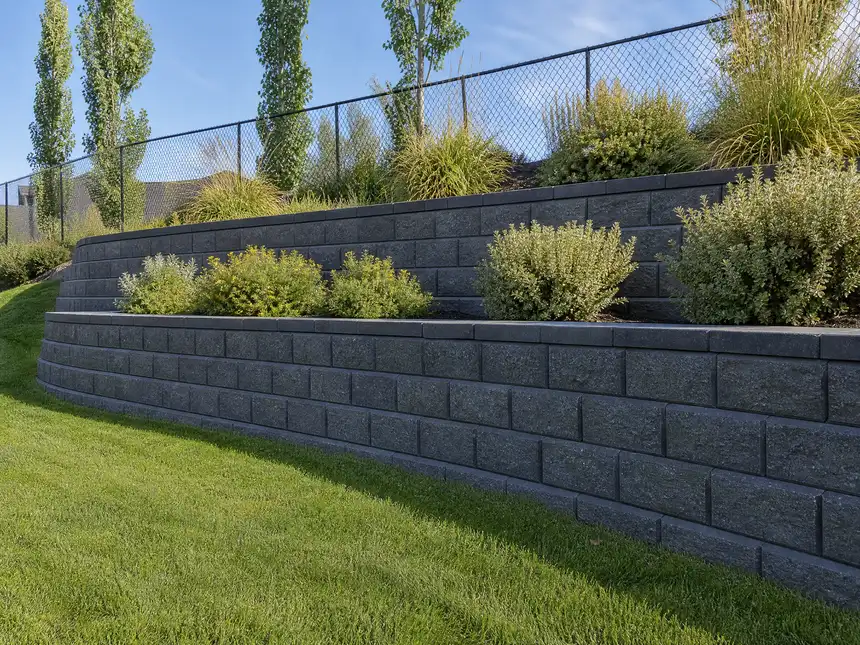
Retaining Walls
Engineered block and boulder retaining walls that hold grade through prairie freeze-thaw.
See what it involves→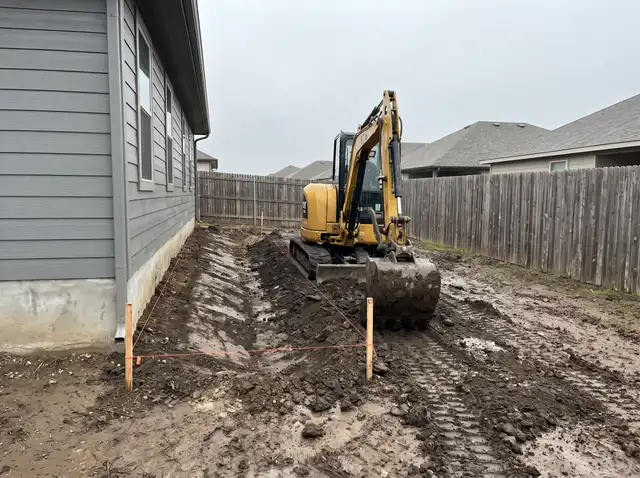
Excavation, Grading & Earthworks
Yard grading, earthworks and drainage correction that moves water away from your foundation.
May through October
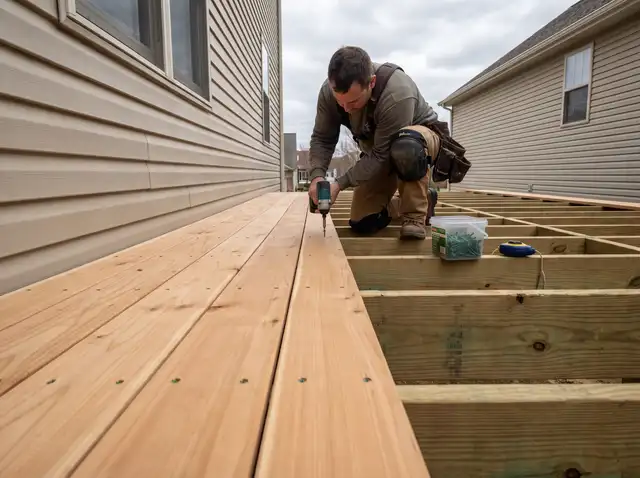
Deck Building
Cedar and composite decks built on footings that go below prairie frost line.
May through October

Landscape Design
Full yard plans with prairie-hardy planting, built around how you actually use the space.
Year-round (design); May–October (build)
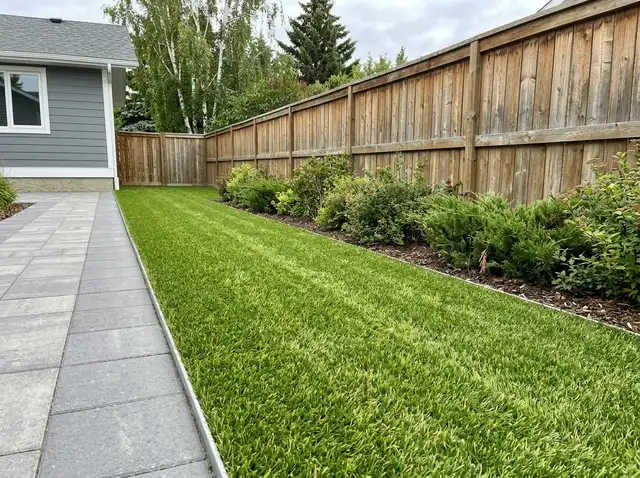
Artificial Turf
Synthetic turf for pet runs, play areas, and yards where real grass has stopped working.
May through October