Guide
Sod or Seed: Which Is Better for a Saskatchewan Lawn?
How sod and seed compare on cost, timing, and results in Saskatchewan, plus the narrow seeding windows that actually work on the prairies.
This guide compares sod and seed for a new lawn in Saskatchewan, covering cost, timing, durability, and the specific constraint that decides it here — a growing season of roughly four months. Seed is dramatically cheaper and needs a full season plus consistent watering to establish, which the prairie calendar does not always allow. It is written for homeowners planning a new lawn on a new build or replacing turf that has failed.
What Does Each Option Actually Cost?
Seed is a fraction of the cost of sod as a material, and on a large area that difference is substantial enough to change what is affordable. That is the honest case for seeding and it is a strong one on acreages and large rural lots.
The gap narrows once you count everything else. Both need the same ground preparation — grading and topsoil, which is the larger part of a Saskatoon lawn quote either way — and seed adds a season of watering, weed control while the lawn is establishing, and the real possibility of having to overseed thin areas the following spring.
A failed seeding is the hidden cost. In a four-month season, a seeding that does not take usually means waiting a full year to try again, and in the meantime you have a yard of mud and weeds.
When Can You Actually Seed a Lawn in Saskatchewan?
There are two workable seeding windows here and both are narrow. Late spring, once soil has warmed but with enough of the season left to establish before the heat — roughly late May — is the first. The risk is that a dry Saskatoon July arrives before the lawn has enough root to survive it.
Late August into early September is the better window. Soil is still warm, nights are cooler, moisture is more reliable, and the new grass has the cool end of the season to establish before freeze-up. If you are seeding in Saskatchewan, this is when to do it.
Dormant seeding in late fall, after the ground has cooled enough that seed will not germinate until spring, is a legitimate third option on the prairies. It works, but germination rates are less predictable and it demands patience through an ugly April.
Which Gives the Better Lawn in the Long Run?
A well-established seeded lawn and a well-installed sod lawn end up very similar after a few years, and neither is inherently better turf. What differs is the risk profile of getting there.
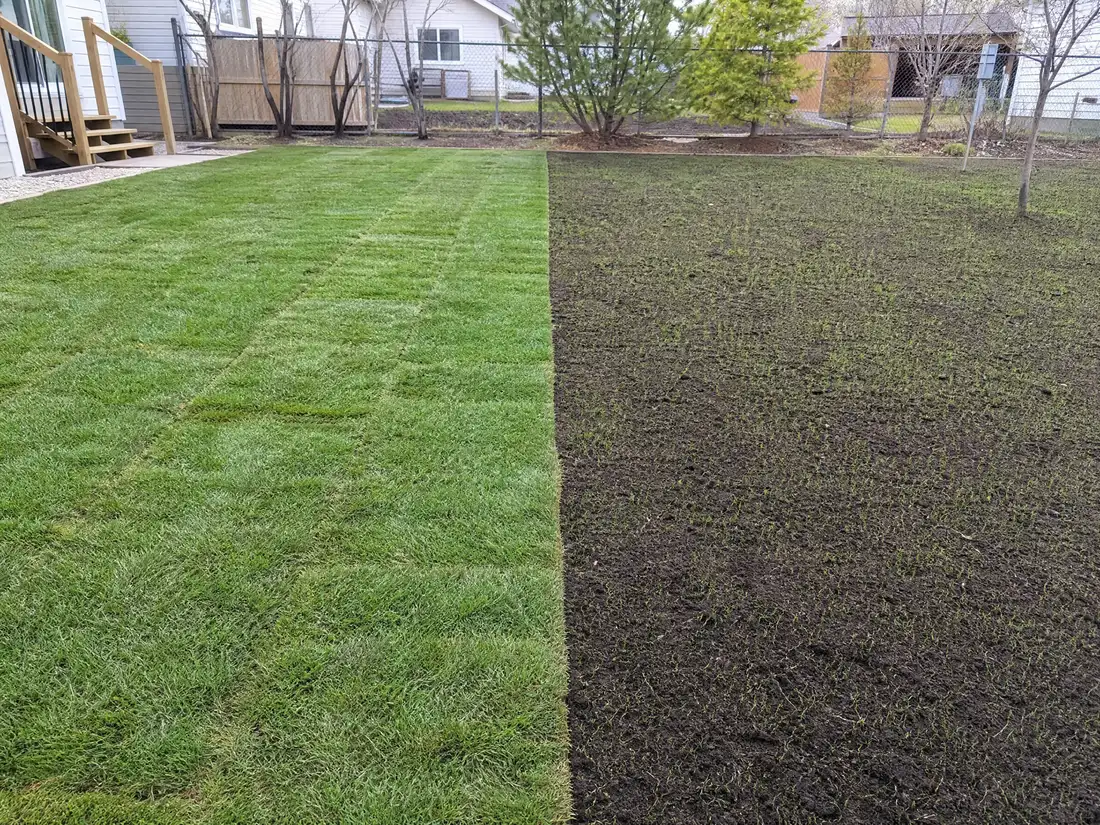
Sod gives you a known outcome on a known date. It is instant, it holds on slopes where seed would wash, it suppresses weeds immediately by covering the ground, and it can be walked on within weeks. In a climate with a short season and reliable July drought, that predictability is worth a lot.
Seed gives you more grass variety options and a lawn that roots directly into your soil from the start, with no risk of the layering problem that occurs when sod is laid over inadequate topsoil. It requires you to be present and consistent for a season.
What Grass Seed Works Best in Saskatchewan?
Kentucky bluegrass is the backbone of prairie lawns and what almost all Saskatoon sod is grown from. It handles zone 3a winters, knits into a dense mat by spreading, and recovers well from wear. Its weakness is drought — it goes dormant and browns in a dry July unless watered.
Fine fescues are worth blending in for shaded areas and for lower-water lawns, since they tolerate both better than bluegrass. Perennial ryegrass germinates fast and is often included in blends as a nurse grass to hold soil while the bluegrass establishes, though it is less winter-hardy here on its own.
A blend rather than a single species is generally the right answer for a Saskatchewan lawn, because different parts of a yard get very different sun, water, and traffic. Buy a blend formulated for the prairies rather than a generic national mix.
Where Does This Fit With the Rest of the Yard?
A new lawn is rarely the only thing a property needs, and the order the work happens in matters more on Saskatoon clay than most people expect. Ground comes first: if water is pooling or running toward the house, grading and drainage is the job to do before anything you can see. Buried services like irrigation go in before surfaces, and sod goes down after the hard landscaping rather than before it.
The jobs most often quoted alongside this one are sod installation, excavation, grading & earthworks and lawn aeration. Doing them in one visit is usually cheaper than bringing equipment back, because the mobilisation and the machine access are paid for once.
If you are planning the whole property rather than one job, start with a landscape design so the phases are sequenced before anything is built. Otherwise, the full service list covers everything we do, the cost guides explain what drives each price here, and the how-to guides are written for Saskatchewan timing rather than the milder-climate advice most search results give you. We work across Saskatoon and the surrounding area, including Warman, and every quote is free and given on site.
Want a number for your own property?
Tell us what you need and where the property is. We come out, look at the ground, and give you a written scope and price — no charge and no obligation.
- Free on-site quotes across Saskatoon
- Prairie-hardy plantings that survive zone 3a winters
- Utility locates arranged before any digging
- Summer yard work and winter snow from one contractor
- Written scope before a shovel goes in the ground
Frequently Asked Questions
Is sod or seed better for a Saskatchewan lawn?
Sod for most residential yards, because the four-month prairie season leaves little room for a seeding to fail. Seed for large areas where sodding would be genuinely expensive and you can protect the area and water it consistently for a full season.
When should you lay sod in Saskatoon?
Any time from late May through late September once the ground can be worked. September is often the best of those — cooler temperatures and more reliable moisture mean far less establishment stress than a July installation.
When should I plant grass seed in Saskatchewan?
Late August into early September is the best window, with late May as the second choice. Dormant seeding in late fall is also viable on the prairies. Midsummer seeding rarely works here, because the heat and drought arrive before the seedlings have any root.
What is the best grass seed for Saskatchewan?
A prairie-formulated blend built around Kentucky bluegrass, with fine fescue for shade and drought tolerance and often some perennial ryegrass for fast establishment. Avoid generic national mixes, which frequently contain species that will not survive a zone 3a winter.
How long does seed take to become a usable lawn?
Germination in one to three weeks depending on temperature, and a full season before it will take normal traffic. A lawn seeded in September is usable the following summer. Sod, by comparison, takes traffic within a few weeks.
Can I seed over an existing thin lawn?
Yes — that is overseeding, and it is a good way to thicken a lawn that is thin but alive. Core aerate first so the seed drops into holes and gets real soil contact. Seed broadcast onto compacted Saskatoon clay mostly feeds the birds.
Does sod work on a slope?
Better than seed, which is one of the clearest cases for it. Sod covers the surface immediately and holds soil in place, while seed on a slope washes into the low point with the first rain. On steeper slopes sod can be pegged until it roots.
How much water does new seed need compared to new sod?
Seed needs frequent light watering to keep the surface constantly moist through germination, which can mean several short waterings a day in dry weather. Sod needs heavy, thorough watering to keep the soil beneath it wet. Both are demanding for the first few weeks, but seed is demanding for considerably longer.
Services this covers
The work behind this guide, quoted on site and in writing.
Late May through September
Sod Installation
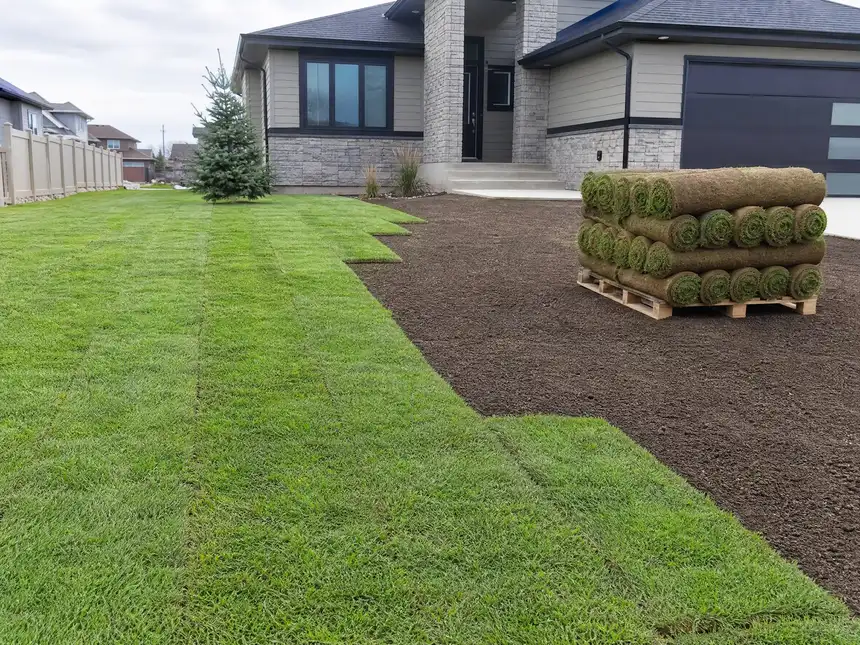
New sod lawns on properly prepared grade and real topsoil depth, not laid over builder clay.
See what it involves→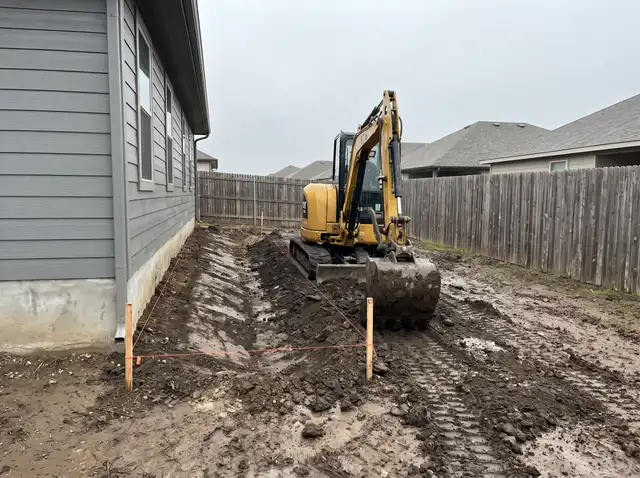
Excavation, Grading & Earthworks
Yard grading, earthworks and drainage correction that moves water away from your foundation.
May through October
Lawn Aeration
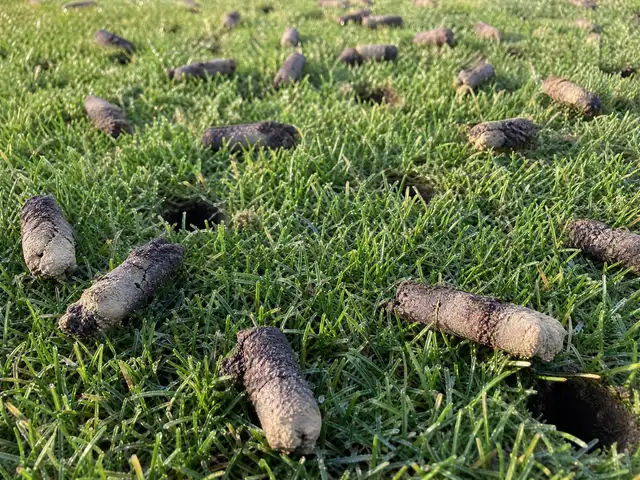
Core aeration that opens up Saskatoon clay so water, air, and roots can get down.
May and September
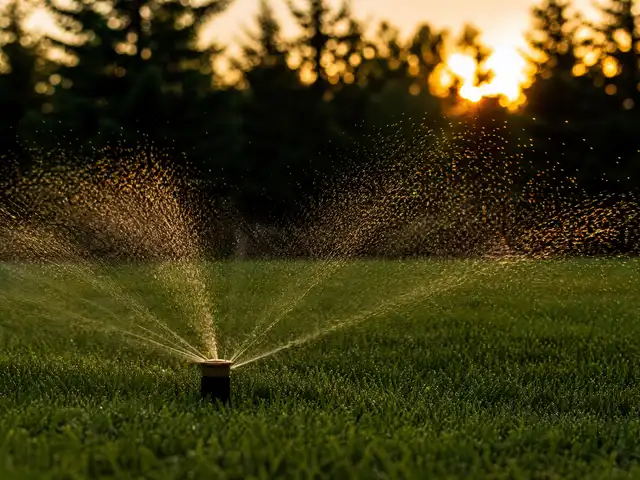
Irrigation & Sprinklers
Sprinkler system design, installation, spring startups, and fall blowouts.
May through October
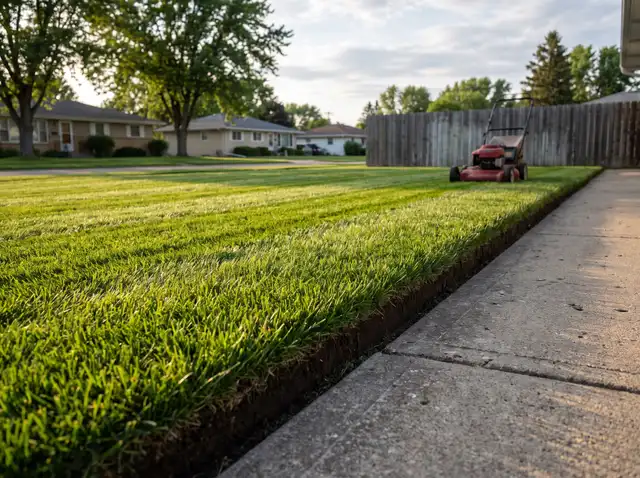
Lawn Care
Weekly mowing, trimming, and seasonal lawn maintenance across Saskatoon and area.
May through September