May through September
Lawn Care in Saskatoon
Weekly mowing, trimming, and seasonal lawn maintenance across Saskatoon and area.
We provide weekly lawn care for homeowners, landlords, and small commercial properties in Saskatoon, including mowing, string trimming, edging, and clipping cleanup from the May green-up through to the September shutdown. Saskatoon lawns are almost entirely Kentucky bluegrass growing on heavy clay in a short, intense season, which means cutting height and timing matter more here than mowing frequency. Customers hire us to keep a lawn consistently sharp without having to think about it.
What Does a Lawn Care Visit in Saskatoon Actually Include?
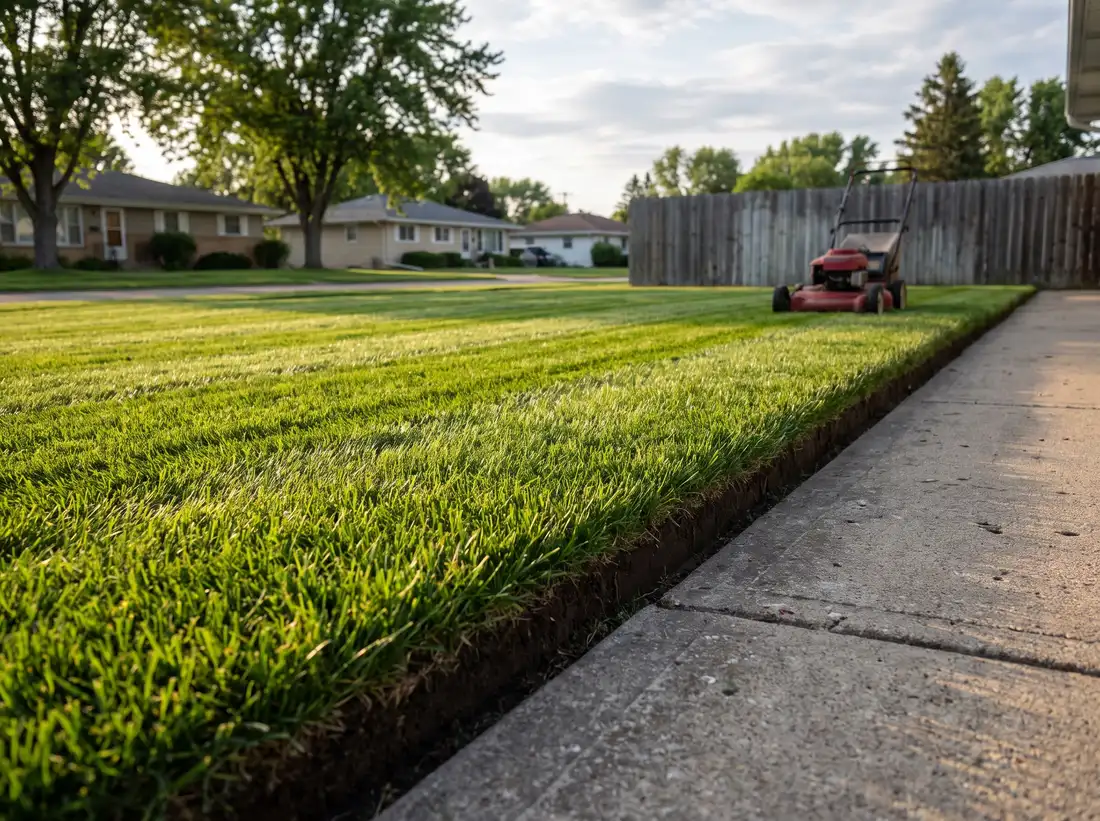
A standard lawn care visit in Saskatoon covers mowing the full turf area, string trimming everywhere a mower cannot reach — fence lines, around trees, along the house — and edging hard surfaces so the walk and driveway keep a clean line. We blow clippings off the concrete before we leave, so the finished yard does not track grass into the house.
We mow on a fixed weekly rotation through the Saskatoon growing season rather than on demand. Bluegrass here puts on most of its growth in a compressed window between late May and early July, and skipping a week during that stretch means removing more than a third of the leaf blade at the next cut, which is what stresses a lawn into going thin and yellow. A consistent schedule is doing most of the work.
Cutting height is the part most Saskatoon homeowners get wrong. We cut high — around three inches — because a taller blade shades the soil, keeps the crown cooler through a hot dry July, and outcompetes the weeds that colonize a short lawn. A scalped lawn on Saskatoon clay bakes and cracks by August.
How Do I Know It Is Time to Hand Off the Mowing?
The usual trigger in Saskatoon is the June growth surge. A lawn that needed cutting every ten days in May suddenly needs it every five, and the yard gets away from people who are travelling, working long weeks, or managing a property they do not live at. Once a lawn has gone two weeks without a cut in June it needs a recovery cut rather than a normal one, and it looks rough for a fortnight afterwards.
The other common trigger is physical. Saskatoon has a lot of large mature lots in neighbourhoods like Nutana, City Park, and Varsity View where the lawn area is genuinely substantial, and pushing a mower over that every week stops being reasonable at some point. Rental and revenue properties are the third: a lawn that nobody living there is responsible for is a lawn that gets cut when a bylaw complaint arrives.
Why Do Saskatoon Lawns Go Thin, Yellow, or Weedy?
The dominant cause in Saskatoon is compaction. Most of the city sits on heavy clay, and clay under a lawn that gets walked on, played on, and mown weekly compresses until water runs off instead of soaking in and roots cannot push down. A compacted lawn looks drought-stressed even when it has been watered, because the water never reached the root zone.
The second cause is cutting too short. A lawn scalped to an inch and a half in a Saskatoon July has no leaf area left to shade its own soil, so the surface dries and heats, the crown stresses, and the bare ground that opens up is immediately colonized by dandelion and creeping thistle — both of which handle that environment better than bluegrass does.
The third is watering habit rather than watering volume. Short daily sprinkles keep the top inch damp and train roots to stay in it, which produces a lawn that collapses the moment anyone misses a few days. Saskatoon summers are dry enough — roughly 357 mm of precipitation across the whole year — that a shallow-rooted lawn has no reserve to draw on.
What Affects the Cost of Lawn Care in Saskatoon?
Turf area is the largest single factor, but it is not simply square footage. A big open rectangle in Hampton Village mows far faster per square metre than a smaller yard in Caswell Hill broken up by mature trees, beds, a shed, and a detached garage, because the time goes into trimming and manoeuvring rather than mowing. Obstacle count drives the price more than lot size does.
Access matters next. A yard reached through a standard gate takes a walk-behind; a yard with no gate wide enough means everything gets carried in. Slopes along the riverbank neighbourhoods, and boulevard strips that have to be done from the street side, both add time.
Frequency and season length are the remaining levers. A weekly contract for the full Saskatoon season costs less per visit than occasional cuts, because the lawn never gets away and each visit is predictable. One-off cuts of an overgrown lawn are priced higher, since removing that much material means double-cutting and bagging.
Add-ons are quoted separately rather than bundled invisibly: bagging and hauling clippings, spring and fall cleanups, aeration, and fertilizing are each their own line so you can see what you are paying for.
Do I Need Weekly Mowing, a Full Maintenance Program, or Just a Cleanup?
If your lawn is basically healthy and the only problem is finding the time, weekly mowing on its own is the right service and the cheapest of the three. It keeps the lawn sharp but it will not fix an existing problem — mowing a compacted, weedy lawn on schedule produces a neatly cut compacted, weedy lawn.
If the lawn is thin, weedy, or has not been fed in years, mowing alone will not turn it around and a full program is the honest recommendation: mowing plus lawn aeration to open up the clay, plus weed control and fertilizing on a proper schedule. That combination is what actually changes the lawn, and it takes a full season to show.
If the lawn is fine and you only need the shoulder seasons handled, a spring and fall yard cleanup without a mowing contract is a legitimate choice and we are happy to quote it that way. And if the turf is genuinely finished — more weed than grass, or dead in patches larger than a dinner plate — the money is better spent on sod installation than on maintaining something that is not coming back.
Where Does This Fit With the Rest of the Yard?
Lawn Care is rarely the only thing a property needs, and the order the work happens in matters more on Saskatoon clay than most people expect. Ground comes first: if water is pooling or running toward the house, grading and drainage is the job to do before anything you can see. Buried services like irrigation go in before surfaces, and sod goes down after the hard landscaping rather than before it.
The jobs most often quoted alongside this one are lawn aeration, weed control & fertilizing and yard cleanup. Doing them in one visit is usually cheaper than bringing equipment back, because the mobilisation and the machine access are paid for once.
If you are planning the whole property rather than one job, start with a landscape design so the phases are sequenced before anything is built. Otherwise, the full service list covers everything we do, the cost guides explain what drives each price here, and the how-to guides are written for Saskatchewan timing rather than the milder-climate advice most search results give you. We work across Saskatoon and the surrounding area, including Warman, and every quote is free and given on site.
Get a free lawn care quote
Tell us what you need and where the property is. We come out, look at the ground, and give you a written scope and price — no charge and no obligation.
- Free on-site quotes across Saskatoon
- Prairie-hardy plantings that survive zone 3a winters
- Utility locates arranged before any digging
- Summer yard work and winter snow from one contractor
- Written scope before a shovel goes in the ground
Frequently Asked Questions
How much does lawn care cost in Saskatoon?
Weekly mowing on a typical Saskatoon city lot is priced per visit, and the figure depends far more on how cut-up the yard is than on its square footage — trees, beds, sheds, and narrow gates all add trimming and manoeuvring time. Full-season contracts cost less per visit than one-off cuts. We quote from a look at the actual yard rather than over the phone, because a photo does not show the gate width or the slope.
How often should a Saskatoon lawn be mowed?
Weekly through the main growing season, which in Saskatoon runs from late May to early September. During the June surge a lawn can genuinely need cutting every five or six days. The rule that matters is never removing more than a third of the blade in one cut — that is what dictates frequency, not the calendar.
What height should grass be cut at in Saskatoon?
Around three inches for the Kentucky bluegrass that makes up almost every Saskatoon lawn. A taller blade shades its own soil, keeps the crown cool through a dry July, and crowds out dandelion and thistle. Cutting to an inch and a half is the single most common cause of a Saskatoon lawn browning off in midsummer.
When does lawn care season start and end in Saskatoon?
First cuts are usually in the second half of May once the ground has dried enough to carry a mower without rutting, and the last cut is generally late September or early October before the first hard frost. The exact dates move by two or three weeks year to year depending on the melt and the fall.
Do you bag the clippings or leave them on the lawn?
We mulch clippings back into the lawn by default, because they return nitrogen and organic matter to soil that badly needs it, and on a weekly cut they are short enough to disappear. We bag on request, and we bag automatically when a lawn has been left long enough that the clippings would smother it.
Will you still mow if it has been raining?
We do not mow saturated turf on Saskatoon clay, because a mower on wet clay ruts the ground and tears the grass rather than cutting it. When rain pushes a visit we shift it to the next dry day rather than skipping the week outright, and we tell you rather than leaving you wondering.
Can you mow a rental or revenue property I do not live at?
Yes, and it is a large share of what we do. We run a fixed schedule, so the lawn gets cut whether or not anyone is there to let us in, and we can send confirmation after each visit. Access needs sorting once at the start — a gate that locks is the usual obstacle.
Do I need a contract, or can I book a single cut?
Both are available. One-off cuts are priced higher than contracted visits because an overgrown lawn takes materially longer — usually a double cut and bagging — and because a single visit cannot be routed efficiently. If you want the lawn maintained rather than rescued, a season contract is cheaper per cut.
How long does it take a neglected lawn to recover?
A lawn that has simply been left long recovers in two or three cuts spread over a couple of weeks, once it has been brought down in stages rather than scalped in one pass. A lawn that is thin and weedy from years of compaction is a different problem and takes a full season of aeration, feeding, and correct mowing to genuinely change.
Do you handle the snow in winter for the same properties?
Yes. There is a practical reason to keep both with one contractor beyond the convenience of a single invoice: whoever mowed your yard all summer knows where your bed edges, walk lines, and sprinkler heads are, which is what keeps a plow blade out of your landscaping in January.
Related services
Most lawn care jobs in Saskatoon come with one or two of these attached — it is usually cheaper to do them in the same visit than to bring equipment back.

May and September
Lawn Aeration
Core aeration that opens up Saskatoon clay so water, air, and roots can get down.
See what it involves→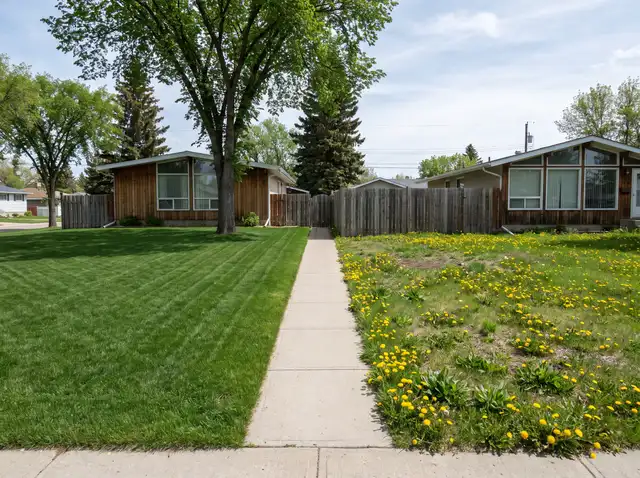
Weed Control & Fertilizing
Scheduled weed control and fertilizer programs built around the Saskatchewan season.
May through September
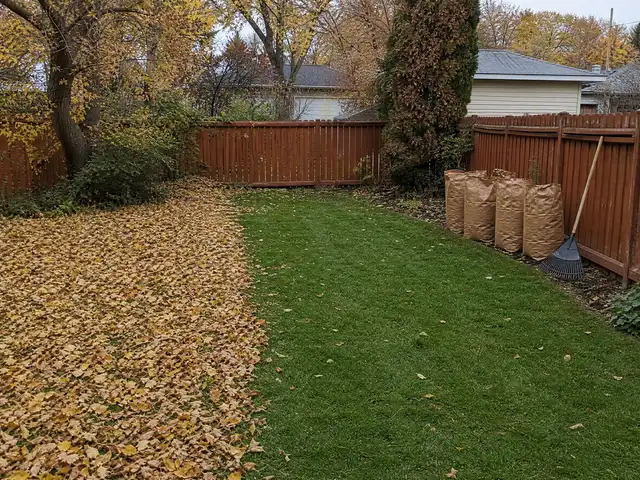
Yard Cleanup
Spring and fall yard cleanups with all debris hauled off the property.
April–May and September–October
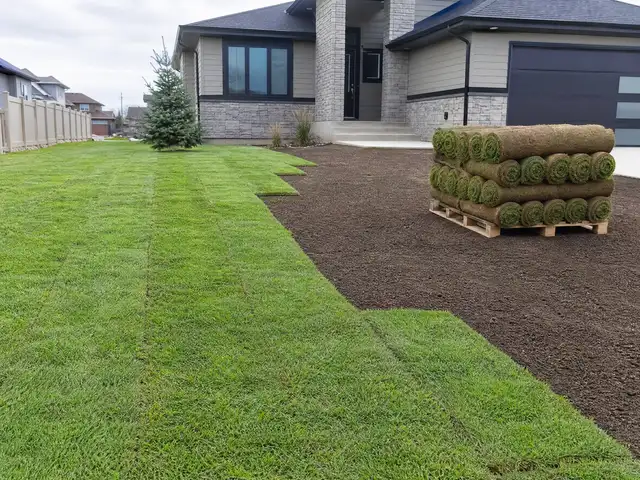
Sod Installation
New sod lawns on properly prepared grade and real topsoil depth, not laid over builder clay.
Late May through September
Snow Removal
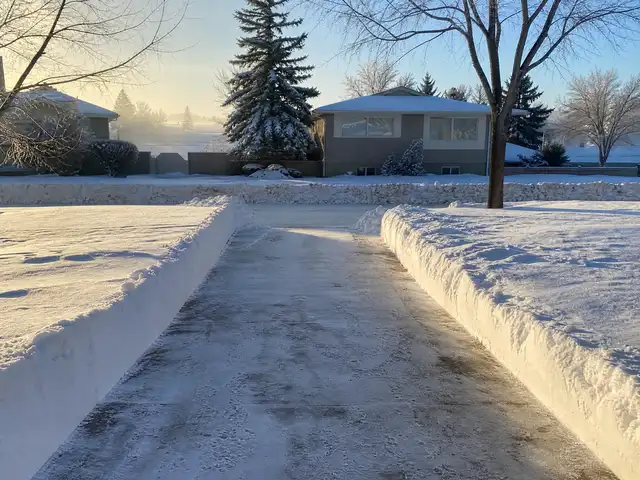
Season contracts for residential driveways, walks, and commercial lots across Saskatoon.
November through March