Year-round (design); May–October (build)
Landscape Design in Saskatoon
Full yard plans with prairie-hardy planting, built around how you actually use the space.
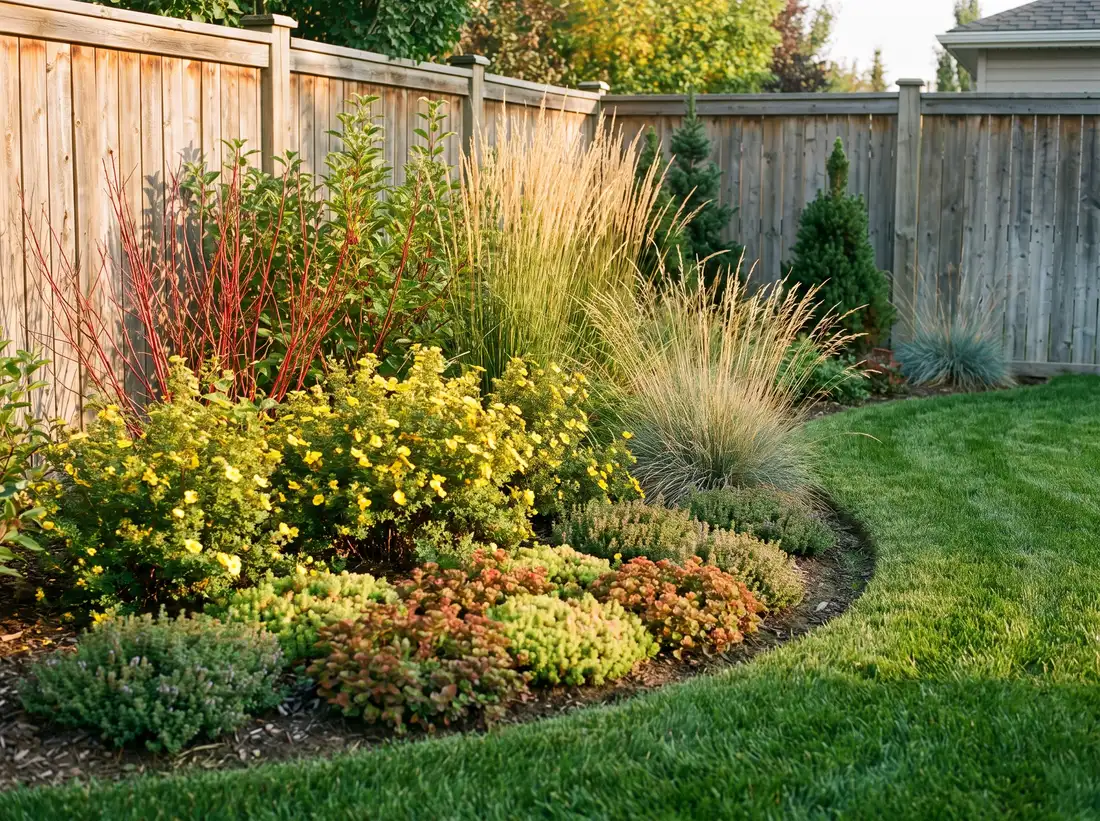
We provide landscape design for residential properties in Saskatoon and the surrounding communities — a plan for the whole yard covering grade, hard surfaces, planting, and how the space gets used, rather than a series of unconnected projects. Zone 3a limits the plant palette sharply and the short season limits what can be built in a year, so sequencing matters as much as layout. Homeowners come to us before spending on a yard they are not sure will work.
What Does a Landscape Design Actually Give You?
A landscape design for a Saskatoon property starts with the constraints rather than the wish list: where the ground falls, where water goes, what gets sun and what sits in the shade of the house or a neighbour's elm, where utilities run, and where the wind comes from. Those decide what is possible before any aesthetic question is asked.
From there we work out how the space is actually going to be used — where people sit, where children play, where the dog runs, how you get from the door to the garage in February — and lay out the hard surfaces, beds, and lawn around that. A plan that ignores the walking routes gets worn paths across the lawn within a year.
The output is a drawn plan with a planting list suited to zone 3a, and a build sequence. The sequence is the part people undervalue: grade before hardscape, hardscape before irrigation, irrigation before sod, sod before finish planting. Doing it out of order means tearing up finished work.
When Is a Design Worth Paying For?
A design earns its cost on a blank slate. A new-build lot in Saskatoon, Warman, or Martensville is a rectangle of clay with no constraints yet imposed, and decisions made in the first season — where the patio goes, where the grade falls, whether irrigation is roughed in — determine what is cheap and what is expensive for the next twenty years.
It is also worth it when the yard is being done in phases, which is how most people afford a full landscape. Without a plan, phase two frequently requires undoing part of phase one. With one, each phase is a piece of a coherent whole and nothing gets built twice.
It is worth skipping when the job is one contained project — replacing a lawn, adding a walk, fixing drainage in a corner. Those do not need a whole-yard plan and we will quote them directly rather than selling a design nobody needs.
Why Do Saskatoon Yards End Up Not Working?
The most common reason a Saskatoon yard disappoints is that it was assembled rather than planned. A deck one year, a patio the next, beds after that — each reasonable on its own, and the result is a yard with no circulation, no focal point, and a lawn cut into shapes that are awkward to mow.
The second is plant choice made from the wrong information. A great deal of gardening advice online is written for zone 5 and up, and plants that thrive in Toronto or Vancouver do not survive a Saskatoon winter. People replace the same dead shrubs for years before concluding the problem is the plant rather than their care.
The third is ignoring grade and water at the design stage. A beautiful bed placed where meltwater collects will drown; a patio at the bottom of a fall becomes a pond every April. On Saskatoon clay, water is the constraint that overrules aesthetics, and it is far cheaper to design around it than to correct it afterwards.
What Affects the Cost of Landscape Design in Saskatoon?
Property size and complexity set the design fee. A standard city lot with a straightforward brief is a modest piece of work; an acreage in Corman Park with multiple areas, a shelterbelt, and a well-based irrigation problem is a much larger one.
How much detail you need matters. A concept plan showing layout and planting zones costs less than a full construction-level drawing set with grades, materials, and quantities, and for a yard we are also building, the concept level is often sufficient.
Revisions are a real variable. A clear brief up front keeps the process short; an evolving brief means redrawing. We front-load the conversation about how you actually use the yard for exactly this reason.
The build cost is a separate matter entirely and dwarfs the design fee. The value of the design is that it makes that much larger number predictable and staged, rather than discovered in pieces.
Do I Need a Full Design, a Sketch, or Just a Quote?
Get a full design when you are doing the whole yard, when you are phasing the work over several years, or when the property has real problems — grade, drainage, slope — that need solving as a system. This is where a plan saves more than it costs.
A concept sketch is enough when you have a good sense of what you want and mainly need the layout resolved and a plant list that will actually survive here. It is faster and cheaper and it covers most straightforward Saskatoon city lots.
Just get a quote when the project is self-contained: a new lawn, a patio, a fence, drainage in one corner. Those are defined jobs with obvious scope, and paying for a design around them adds cost without adding clarity. We will say so rather than upselling a plan.
Where Does This Fit With the Rest of the Yard?
Landscape Design is rarely the only thing a property needs, and the order the work happens in matters more on Saskatoon clay than most people expect. Ground comes first: if water is pooling or running toward the house, grading and drainage is the job to do before anything you can see. Buried services like irrigation go in before surfaces, and sod goes down after the hard landscaping rather than before it.
The jobs most often quoted alongside this one are paving stones & patios, sod installation and retaining walls. Doing them in one visit is usually cheaper than bringing equipment back, because the mobilisation and the machine access are paid for once.
If you are planning the whole property rather than one job, start with a landscape design so the phases are sequenced before anything is built. Otherwise, the full service list covers everything we do, the cost guides explain what drives each price here, and the how-to guides are written for Saskatchewan timing rather than the milder-climate advice most search results give you. We work across Saskatoon and the surrounding area, including Warman, and every quote is free and given on site.
Get a free landscape design quote
Tell us what you need and where the property is. We come out, look at the ground, and give you a written scope and price — no charge and no obligation.
- Free on-site quotes across Saskatoon
- Prairie-hardy plantings that survive zone 3a winters
- Utility locates arranged before any digging
- Summer yard work and winter snow from one contractor
- Written scope before a shovel goes in the ground
Frequently Asked Questions
What plants actually survive a Saskatoon winter?
Saskatoon is hardiness zone 3a, which rules out a great deal of what garden centres elsewhere sell. Reliable choices here include native and prairie-adapted shrubs like potentilla, dogwood, and ninebark, hardy roses bred on the prairies, and perennials like daylily, hosta in shade, and native grasses. Anything rated zone 4 or above is a gamble in an open exposed yard.
How much does landscape design cost in Saskatoon?
Design is priced separately from construction, and it scales with property size and how detailed a drawing set you need. A concept plan for a city lot is a modest fee; a full construction drawing set for an acreage is considerably more. Where we are also building the yard, the design fee is frequently credited against the build.
When should I start planning a yard project?
Over the winter, for a build the following season. Design work happens year-round because it does not need the ground to be workable, and coming into spring with a finished plan is what gets you an early build slot. Starting the design in May means building in August.
Can you design a yard I build myself over several years?
Yes, and it is a common and sensible way to do it. The plan includes a build sequence so each phase is completed in an order that does not require undoing earlier work — grade before hardscape, services before surfaces. That sequence is most of the value for a phased project.
What is xeriscaping and does it work in Saskatoon?
Xeriscaping means designing a yard to need little or no supplemental water, using drought-tolerant plants, mulch, and reduced lawn area. It works well in Saskatoon, where annual precipitation is around 357 mm and July is reliably dry. It is not a gravel yard with three plants — done properly it is dense, layered planting that simply does not need watering.
How do I make a yard that needs less maintenance?
Reduce lawn area, group plants by water need, mulch beds properly, and choose plants that reach their mature size in the space available so they never need constant cutting back. The single biggest maintenance saving in a Saskatoon yard is not fighting the climate — a bed of prairie-hardy shrubs needs almost nothing, while the same bed planted with marginal species needs replacing.
Do you handle permits and utility locates?
Yes, for the work we build. Decks, fences over a certain height, retaining walls above a threshold, and significant grade changes all have permit implications in Saskatoon, and every project involving digging needs utility locates. We handle both rather than leaving them with you.
Can you work with a design someone else drew?
Yes. We are happy to build to another designer's plan. We will review it first for the things that matter locally — frost depth on footings, base depths for hardscape on clay, drainage, and plant hardiness — and raise anything that will not work here before we start, not halfway through.
Related services
Most landscape design jobs in Saskatoon come with one or two of these attached — it is usually cheaper to do them in the same visit than to bring equipment back.
May through October
Paving Stones & Patios
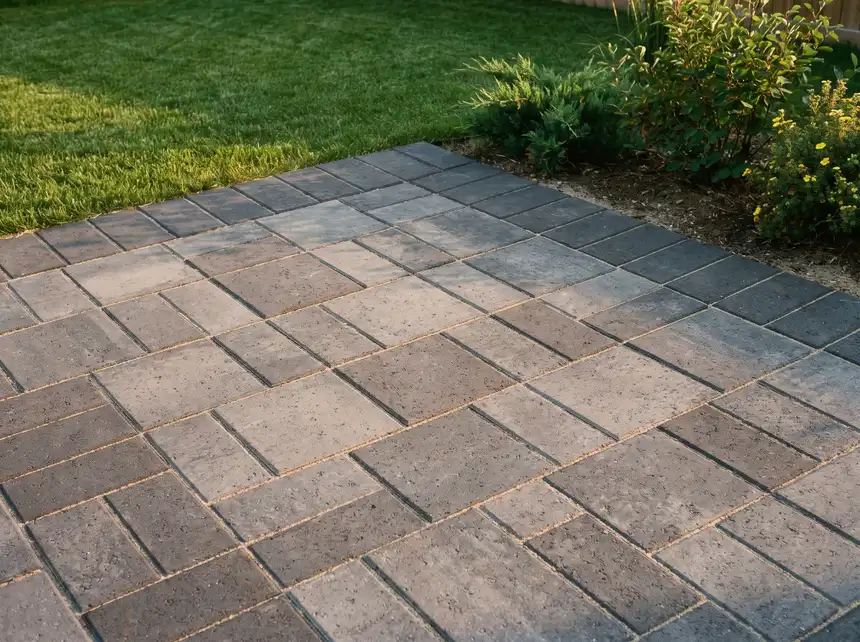
Paving stone patios, walkways, and driveways built on a base that handles prairie frost.
See what it involves→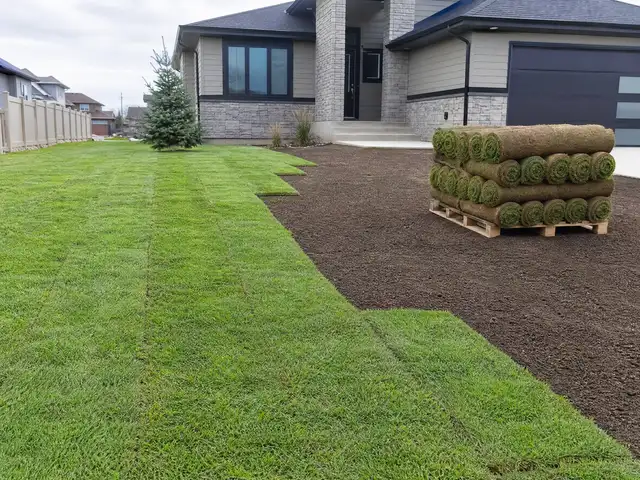
Sod Installation
New sod lawns on properly prepared grade and real topsoil depth, not laid over builder clay.
Late May through September
Retaining Walls
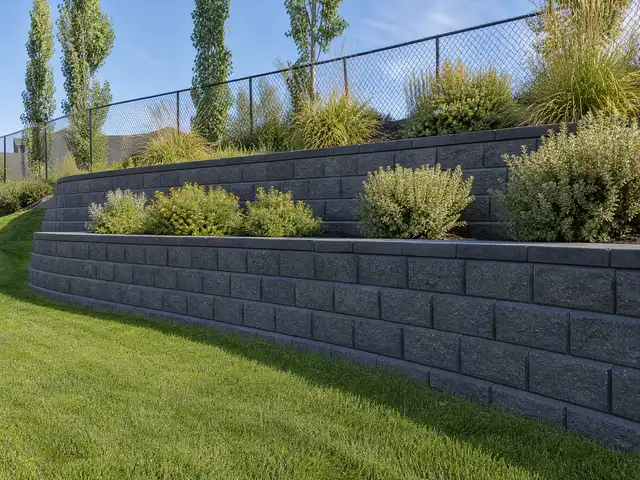
Engineered block and boulder retaining walls that hold grade through prairie freeze-thaw.
May through October

Irrigation & Sprinklers
Sprinkler system design, installation, spring startups, and fall blowouts.
May through October
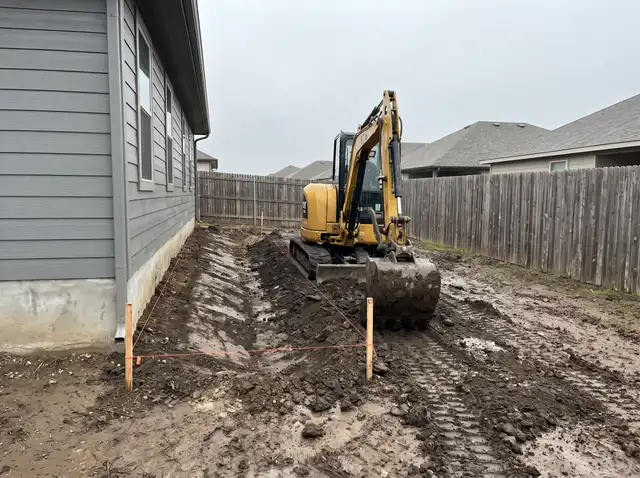
Excavation, Grading & Earthworks
Yard grading, earthworks and drainage correction that moves water away from your foundation.
May through October