Guide
How Do You Level a Bumpy Lawn?
How to level a bumpy or uneven lawn on heavy clay, when topdressing is enough, and when the problem is grade rather than surface.
This guide covers levelling a bumpy or uneven lawn, with the specifics that matter on the heavy clay most Saskatoon yards sit on. There are two genuinely different problems here — a surface that is lumpy but drains fine, and a lawn whose grade sends water the wrong way — and they need different fixes. It is written for homeowners whose lawn is uncomfortable to walk on, scalps when mown, or holds water in the same place every spring.
Is It a Surface Problem or a Grade Problem?
A surface problem is a lawn that is lumpy and uneven underfoot but drains normally — water does not stand anywhere for long and nothing runs toward the house. This is fixed by topdressing and it is a manageable job.
A grade problem is a lawn where water collects in the same place after every rain, sits for days or weeks after the melt, or runs toward the foundation. This cannot be fixed by adding soil to the low spot, because the surrounding ground is still directing water there. It needs regrading.
The test is simple: watch the yard during the next real rain, and again during the spring melt. If water arrives somewhere and stays, you have a grade problem regardless of how the surface feels underfoot.
How Do You Topdress a Lawn to Level It?
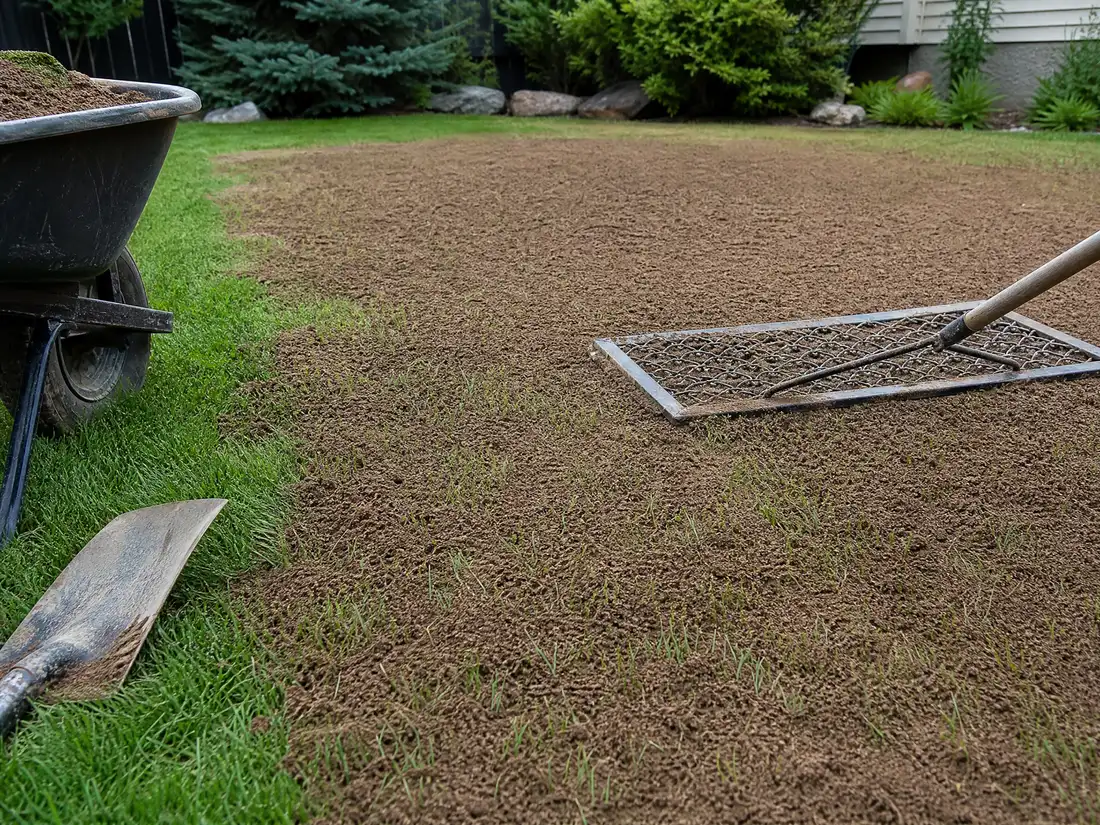
Topdressing means spreading a thin layer of soil mix across the lawn and working it into the surface, filling small depressions without smothering the grass. The critical rule is thin — no more than about half an inch in one application, because grass buried deeper than that dies and you have created a bare patch where you were trying to fix a bump.
Use a mix rather than pure topsoil on Saskatoon clay. A sandy loam or a proper topdressing blend improves surface drainage as it fills; adding more heavy clay on top of heavy clay levels the surface while making the compaction worse.
Spread with a shovel, then work it in with the back of a rake or a drag mat until the grass blades are showing through everywhere. Deeper hollows need multiple applications over several months rather than one thick one — this is a job done in stages across a season.
What Causes a Lawn to Go Bumpy in Saskatoon?
Frost heave is the leading cause on the prairies. The annual freeze-thaw cycle moves the surface unevenly, and on clay — which holds a lot of water to freeze — the movement is pronounced. A lawn that was flat when it was laid will develop some unevenness here regardless of what anyone does.
Settling of poorly compacted fill is the second, and it is why new builds in Saskatoon and Warman often go bumpy in their second or third year. Fill placed during construction and left loose settles unevenly, and the lawn on top follows it down.
Then the ordinary causes: mole and vole activity, old stump or root voids collapsing as the wood rots underground, and ruts from equipment or vehicles driven on wet clay. A rut pressed into saturated clay is effectively permanent until it is repaired.
Should You Level, Regrade, or Start Over?
Topdress when the lawn is basically healthy, the drainage works, and the unevenness is measured in centimetres. This is the cheapest fix by a wide margin and it can be done gradually over a season without disrupting the yard.
Regrade when water goes the wrong way. That is a drainage problem and it is worth fixing properly, particularly if water is heading toward the house — the cost of correcting a grade is far less than the cost of a wet basement.
Strip and start over when the lawn is both badly uneven and in poor condition, or when the ground beneath needs work that cannot be done from the surface. If you are going to remove the turf anyway, that is the moment to fix the grade, get real topsoil depth down, and lay sod on a properly prepared base.
Where Does This Fit With the Rest of the Yard?
Levelling a bumpy lawn is rarely the only thing a property needs, and the order the work happens in matters more on Saskatoon clay than most people expect. Ground comes first: if water is pooling or running toward the house, grading and drainage is the job to do before anything you can see. Buried services like irrigation go in before surfaces, and sod goes down after the hard landscaping rather than before it.
The jobs most often quoted alongside this one are excavation, grading & earthworks, sod installation and lawn aeration. Doing them in one visit is usually cheaper than bringing equipment back, because the mobilisation and the machine access are paid for once.
If you are planning the whole property rather than one job, start with a landscape design so the phases are sequenced before anything is built. Otherwise, the full service list covers everything we do, the cost guides explain what drives each price here, and the how-to guides are written for Saskatchewan timing rather than the milder-climate advice most search results give you. We work across Saskatoon and the surrounding area, including Warman, and every quote is free and given on site.
Want a number for your own property?
Tell us what you need and where the property is. We come out, look at the ground, and give you a written scope and price — no charge and no obligation.
- Free on-site quotes across Saskatoon
- Prairie-hardy plantings that survive zone 3a winters
- Utility locates arranged before any digging
- Summer yard work and winter snow from one contractor
- Written scope before a shovel goes in the ground
Frequently Asked Questions
How much topdressing can I put on a lawn at once?
No more than about half an inch. Grass buried deeper than that dies, so a thick application creates bare patches exactly where you were trying to fix bumps. Deeper hollows need several thin applications spread over months.
What is the best topdressing mix for clay soil?
A sandy loam or a purpose-made topdressing blend rather than pure topsoil. Adding heavy clay on top of heavy clay levels the surface while worsening the compaction underneath, which is the actual problem on most Saskatoon lawns.
When is the best time to level a lawn in Saskatoon?
Late spring once the lawn is actively growing, or early fall. The grass needs to be growing to recover and grow up through the topdressing, so midsummer heat and late fall dormancy are both poor choices.
Can I use sand to level my lawn?
Pure sand on clay is a common recommendation and generally a poor one — a sand layer over clay can create a perched water table where water sits at the boundary between the two. A blended mix is the safer choice here.
Why does my lawn get bumpy every year?
Frost heave, and on Saskatoon clay it is unavoidable to some degree because clay holds a great deal of water to freeze. Recurring severe unevenness in the same spot, though, usually means settling fill or a decaying root mass underground rather than normal frost movement.
How do I fix ruts from a vehicle on my lawn?
Ruts in clay are compaction and cannot be fixed by filling them. Loosen the compacted soil in the rut first, then bring it back to grade with a soil mix and reseed or patch with sod. Filling a rut without loosening it leaves a compacted band that will never grow properly.
Will rolling my lawn level it?
No, and it usually makes things worse. Rolling compresses the soil, which on Saskatoon clay adds to the compaction that is likely already the underlying problem. Levelling is done by adding material to low spots, not by pressing high spots down.
Do I need to level before laying sod?
Yes, and this is the point at which levelling is easiest and cheapest to get right. A low spot under new sod holds meltwater for weeks in a Saskatoon spring and kills the grass in it, and correcting it afterwards means lifting the sod you just paid for.
Services this covers
The work behind this guide, quoted on site and in writing.
May through October
Excavation, Grading & Earthworks
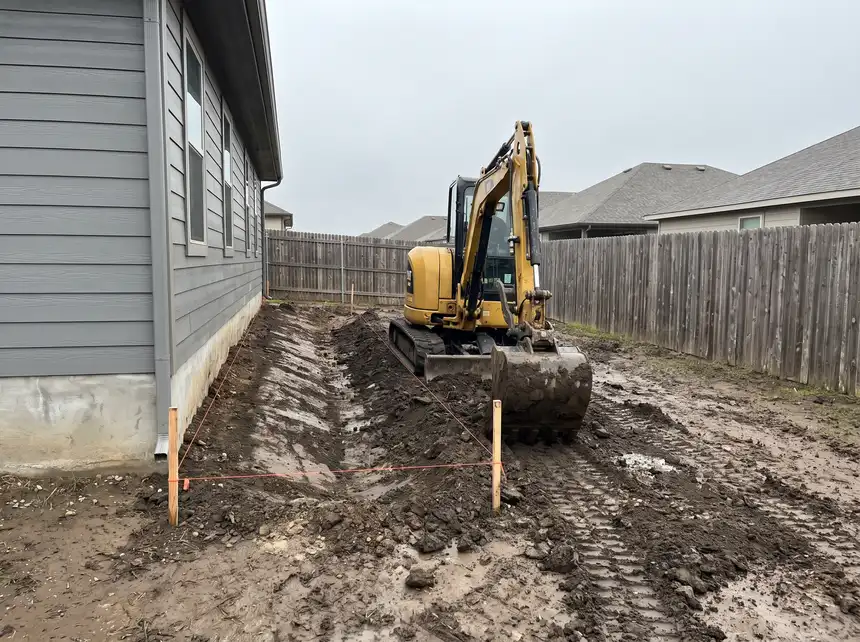
Yard grading, earthworks and drainage correction that moves water away from your foundation.
See what it involves→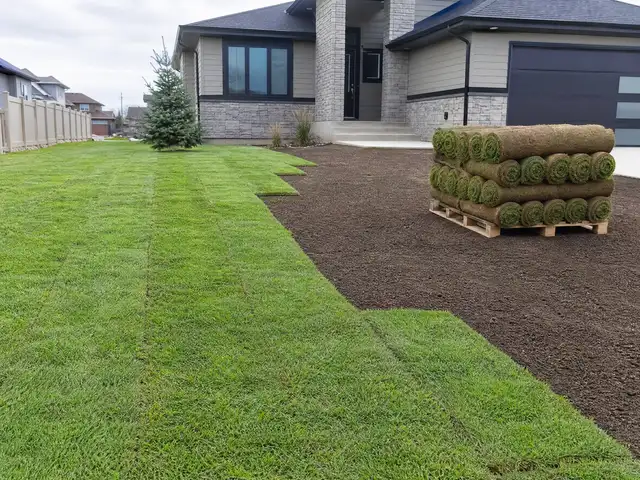
Sod Installation
New sod lawns on properly prepared grade and real topsoil depth, not laid over builder clay.
Late May through September
Lawn Aeration
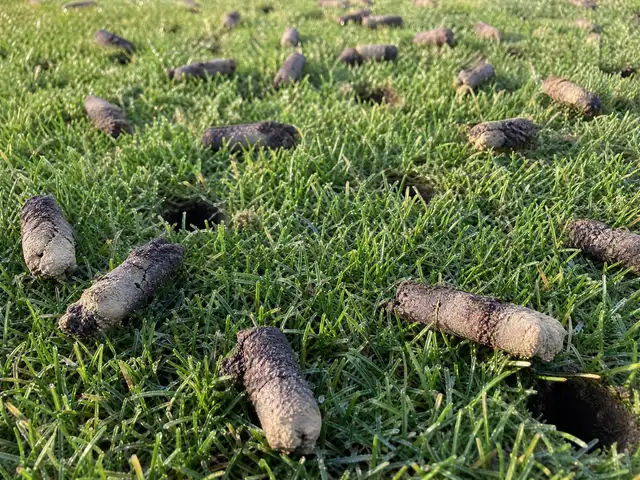
Core aeration that opens up Saskatoon clay so water, air, and roots can get down.
May and September
Lawn Care
Weekly mowing, trimming, and seasonal lawn maintenance across Saskatoon and area.
May through September
Irrigation & Sprinklers
Sprinkler system design, installation, spring startups, and fall blowouts.
May through October